
José Martínez: The Work of Becoming
PROLOGUE
It is Monday, August 17, and the voice of José Martínez has been echoing through the halls of my apartment for most of the weekend.
I have spent an unreasonable number of hours listening back to our conversation. Somewhere along the way, I also kept listening to Ella Fitzgerald. By the time we initially finished speaking, three hours had passed, my notebook looked like a crime scene of timestamps and half-written quotes, and fashion dragged us all through Salvador Dalí to Andy Warhol.
I had no interest in asking him when he knew he wanted to become a designer or where he saw himself in five years. What interested me was the contradiction inside him: the man who speaks about disappearing into an ethereal realm to design something almost otherworldly and, moments later, explains why a pant whose pocket is sitting a quarter-inch too low can be the reason why it doesn’t sell. The artist who speaks about delirium can discuss Italian wool like a manufacturer. And the designer who wants to belong fifty years in the future understands perfectly well that somebody still has to pay for the fabric.
Somewhere around hour two, I also informed him that he occasionally has the look of a serial killer.
He took it very well.
JOSÉ: Maybe I do a collection about it.
FREDDY: Would be very Joan by McQueen, very Matières Fécales.
We began with taste.
I — TASTE.
FREDDY: Do you agree that you either got it, or you don’t? Do you believe taste is something we’re born with, or something we’re taught?
JOSÉ: I think taste can be both and neither. Taste is a reflection of how you value culture—your own and others—and how informed you are about it. People tend to associate taste with class, and I couldn’t disagree more. Whether you come from America, Europe, Africa, Asia, wherever, if you respect culture and you incorporate that knowledge into your wardrobe, your interiors, your life, that becomes a reflection of what you value aesthetically. Taste is about education, but not necessarily in the academic sense. Why do you wear that? Why do you like that painting? Why do you like this album? The more deeply you understand these things, the more developed your taste becomes.
FREDDY: So taste is knowing your point of view. You also see taste less socioeconomically and more anthropologically.
JOSÉ: Exactly. You can have a kitsch point of view. You can love Rococo. You can love minimalism. Whatever. If you are sufficiently informed within that subject, you can arrive at the most exquisite version of it.
FREDDY: Which I find interesting because people increasingly treat taste almost as a compartment. They think there is a “tasteful” chair, a “tasteful” outfit, a “tasteful” apartment. But what you’re describing is almost the opposite. The object itself doesn’t give you taste; your relationship to the object does.
JOSÉ: Yes. Exactly.
Taste cannot be purchased. One cannot assemble it from sandals, Murano glass, or the correct shade of cerulean.
FREDDY: Do you think beauty is a need? A human need?
JOSÉ: Beauty is the biggest need. I think the whole world runs on beauty. We have even created systems to quantify the value of beautiful or desirable things. But when people hear “beauty,” the first thing they imagine is probably a gorgeous woman with perfect features, perfect hair, beautiful clothes. I don’t entirely agree with that. For me, beauty encompasses everything good in life. Value can be beautiful. Relationships can be beautiful. Ideas can be beautiful. And beauty can exist in things that are objectively horrible.
FREDDY: Beauty is also spiritual.
JOSÉ: Exactly. From a very young age, I was trained to find beauty where other people might see nothing—or something ugly. Literature is a perfect example. You can beautifully express a story about something terrible. You can explain a horrible social issue through something beautiful. Designers and creatives have that responsibility too. We can shine a light on the ugly things within society by finding elements that allow people to actually digest them.
FREDDY: Which is why I sometimes think beauty functions almost like an anesthetic for the misery of being alive—not because it erases what is horrible, but because it makes the horrible bearable enough to confront.
JOSÉ: Yes. It is also translation. You’re making someone see something they otherwise might have never seen.
FREDDY: Which makes beauty less frivolous than people assume.
JOSÉ: Yes.
II — CRAFT IN THE AGE OF SPEED.
FREDDY: You’ve worked very early and very physically with clothes—sewing, patternmaking, construction. Do you feel craftsmanship is disappearing, or has it simply become invisible?
JOSÉ: I actually don’t think craft is disappearing. We live in an age of mass production, algorithms, and shortened attention spans. All of that has diluted our perception of craftsmanship. Somewhere along the way, somebody sold the idea that mass-produced clothes are simply made by machines. Clothes are still made by people.
FREDDY: The machine is a concealer.
JOSÉ: Exactly. Obviously some ancient techniques disappear over time. That’s part of history. But what I see disappearing is respect for the people doing the craft. The salaries we give them. The environments they work in. Their quality of life. Someone in a factory may have spent their entire life attaching sleeves or making collars. Maybe their mother did it, maybe their grandfather knew another version of that technique. These are still skills.
FREDDY: So the craft didn’t disappear. We made the human being behind it disappear.
JOSÉ: And that’s convenient, because if people believe everything is produced by a machine, they ask fewer questions about what happens behind the machine.
FREDDY: About exploitation.
JOSÉ: Exactly. The craft is still there. What changed is the story we tell the customer about where it comes from.
I see there is a comfort in imagining mass production as mechanical. A machine cannot be underpaid. It cannot work in unsafe conditions. It cannot have children living beside a polluted river. The seam becomes considerably easier to consume if it has no author.
FREDDY: Which inevitably leads me here: if someone knows nothing about how clothes are actually made, can they truly love fashion?
JOSÉ: I think they can say they love fashion.
FREDDY: (laughs).
JOSÉ: Listen, someone can absolutely appreciate fashion and have a good eye. They can recognize a beautiful product without knowing how to make it. Something as simple as a silk rouleau strap instead of a flat one communicates value. Every detail you add beyond a basic pattern increases difficulty, price, and production risk. If you understand why those details matter, you start understanding the garment differently.
FREDDY: But if you don’t?
JOSÉ: Maybe you’re only into fashion. But I think the word love should imply a deeper relationship. If you don’t understand why a French seam is the proper way to finish a beautiful silk dress, for example, there is a level of the object you simply aren’t meeting.
FREDDY: So the title has to be earned.
JOSÉ: Yes. The man you love is the man you end up marrying. He isn’t the guy you were obsessed with for a few nights. You cannot decide you love someone until you actually know them.
FREDDY: Fashion as marriage… as persuasive as it can get. Then what does sewing teach you that sketching never could?
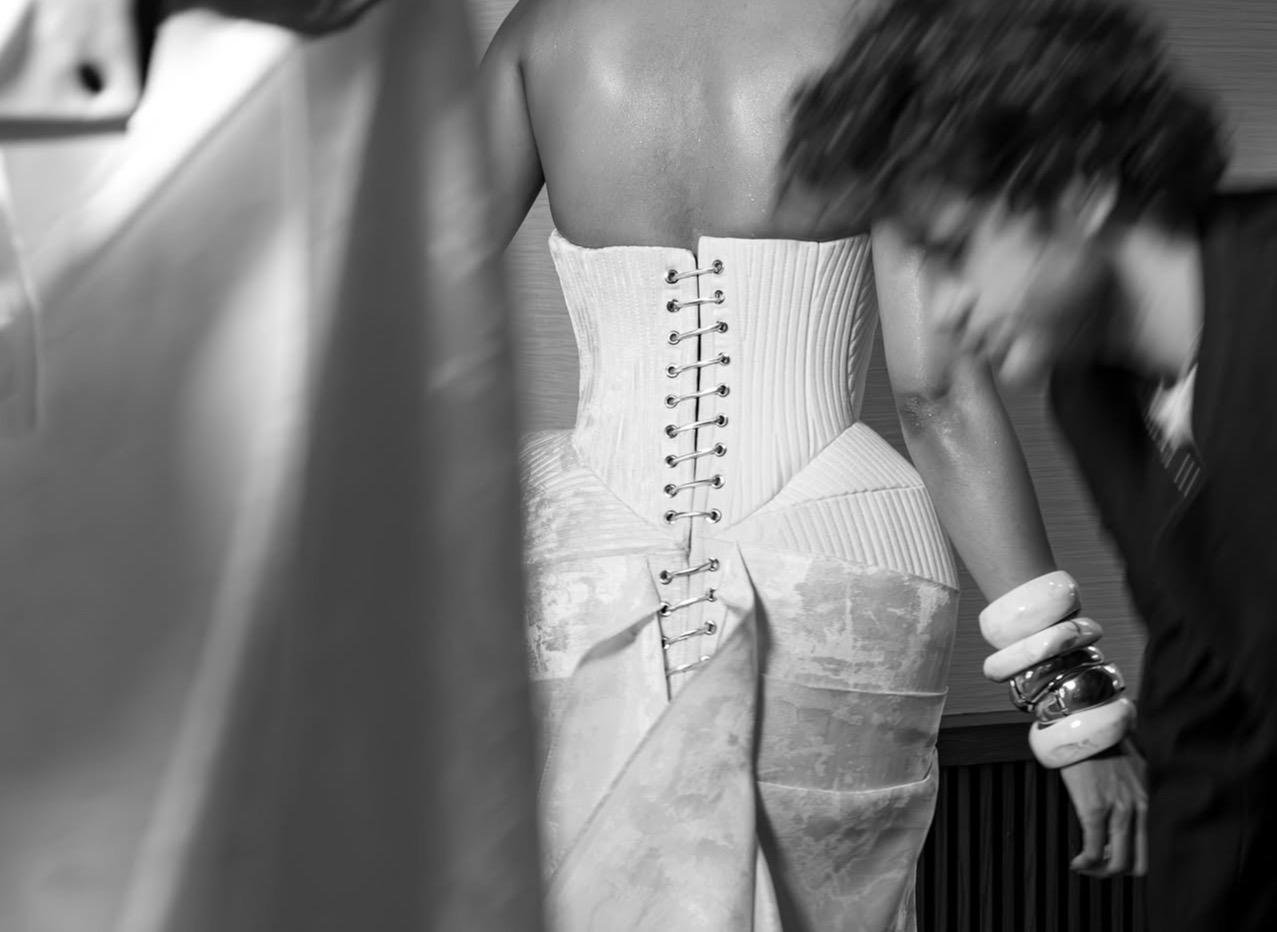
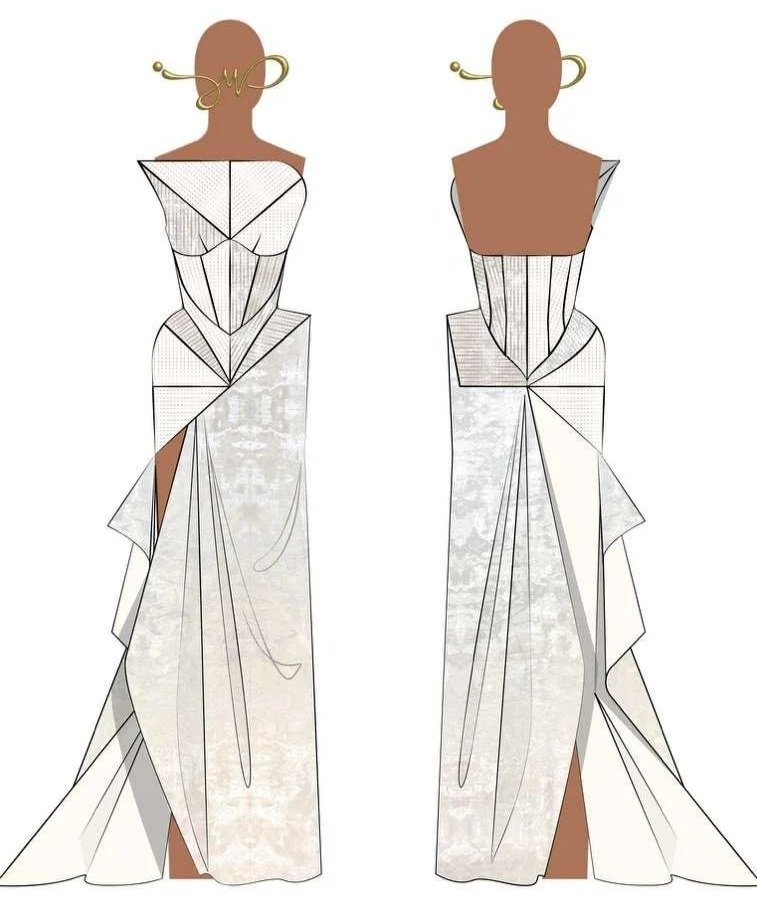
JOSÉ: The laws of gravity. A sketch will never tell you exactly how a fabric is going to fall. It won’t tell you how the garment feels or behaves once it is in motion. Sketching is one of the best tools you have to communicate a vision, but draping teaches you what the object actually is.
FREDDY: The sketch, in this case, is idealism, and then gravity humiliates you.
JOSÉ: Basically. That is why drapers, patternmakers, and technical designers are so important. They’re the people thinking logically about how the garment becomes its best wearable version.
FREDDY: Which is funny because your creative language is very fantasy-based. You’ve spoken to me about entering a completely different mental space in your creative process.
JOSÉ: And that’s exactly what lets me make the fantasy work. You need both.
José introduced me to Mecano’s “Eungenio” Salvador Dalí, a song about the line between genius and madness. Dalí led us to Mexico, surrealism, and eventually to the obvious question.
FREDDY: Do you think a great artist has to possess some degree of insanity?
JOSÉ: Absolutely. Not actual insanity though. You obviously have to be functional enough to live life. But I think you need some sort of madness. If you don’t, your brain isn't going to the right places.
FREDDY: This is going to sound slightly offensive, but I mean it in the best way possible: when I speak to you, I can immediately tell there’s something slightly… off. There’s a weirdness there. Your expressions, your language, something there.
JOSÉ: I love that.
JOSÉ: I love learning about spirituality. The ethereal. I need to daydream. I need to wander around. You can see that in my designs. If I limited myself to what is perceived as normal, that would kill my art.
FREDDY: So conventionality is the real danger.
JOSÉ: Being conventional is in close proximity to being mediocre.
FREDDY: Which actually connects beautifully to how you entered fashion. You started through theatre.
JOSÉ: I originally wanted to paint. Then a teacher asked me to help design a play. She basically told me, “I’m going to teach you some fashion history, and you’re going to figure it out.” Eventually I was doing productions for the school and managing budgets.
FREDDY: So from the beginning, fashion for you was world-making.
JOSÉ: It still is. When I design, I need to know where this person is, when this is happening, what world exists around the clothes. It’s another reality.
Before clients, buyers, sales reports and vendors, there were characters who needed clothes in order to exist inside an imaginary world. Years later, the clothes have become considerably more technically sophisticated.
III — COMMERCE VERSUS ART.
FREDDY: Is compromise the price of working in fashion?
JOSÉ: Absolutely. I think designers today are current versions of the artistic geniuses we study in history because fashion contains so many disciplines. Commerce, painting, sculpture, weaving, sewing. And I put commerce very early in that list because, for an artist, commerce is probably the biggest compromise. It dictates and limits the function of your art.
FREDDY: But also mastering that limitation is part of the talent.
JOSÉ: Exactly. Being creative inside those compromises and still making the product feel innovative is a skill. People think a designer just sketches a collection and every drawing ends up on the runway. That is not how it works.
FREDDY: Of course. There are percentages of categories inside the collection. There are products that need to exist because commercially the customer expects them. Sometimes something sold extremely well last season, so you sell it again. Jonathan Anderson is a good example.
JOSÉ: Completely. You can see JW Anderson, Dior and something as commercial as Uniqlo and understand three different versions of the same designer operating inside completely different systems.
FREDDY: Yet your personal work operates differently.
JOSÉ: Completely. I see myself as a multidisciplinary fashion designer building a toolbox across categories. Couture, fast fashion, commercial, made-to-measure. Right now I’m learning things about the best quality fabrics and materials. Those things might look removed from the JMP vision, but they aren’t. Eventually they all become part of it.
FREDDY: I initially saw that as a contradiction. The person who wants to disappear into some ethereal mental space is also making very commercial clothes.
JOSÉ: It’s a built-in step. My full-time work gives me the resources to make the things I actually want to make. Sadly, money drives creative power. You need supplies. I need enough fabric to cut, test, destroy, and try things again. That process costs money. If I could not finance it, JMP would be dead.
FREDDY: Do you think commercial fashion can still produce aspiration?
JOSÉ: Absolutely. Creating aspiration can be as simple as choosing the correct stripe or floral, but only if you understand the world you are trying to build. It comes back to being informed. What color combinations communicate this person? What fabric? What casting? What setting?
FREDDY: So aspiration does not live exclusively inside the garment.
JOSÉ: Not at all. The most important part is knowing exactly who your customer is and who they want to become.
FREDDY: Which means you need to know far more than her size.
JOSÉ: Everything. What kind of house does she live in? What does her day look like? Does she pick her children up from school? Does she exercise? Where? What does she eat? If she buys organic food, maybe she is not going to respond well to polyester. The more information you have about your customer, the better you understand how to satisfy her needs.
FREDDY: That becomes luxurious surveillance.
JOSÉ: Basically.
FREDDY: Know the bar she drinks at.
JOSÉ: Or know that she doesn’t go to bars.
FREDDY: Maybe she drinks natural wine.
JOSÉ: (laughs) Exactly.
FREDDY: But that is ultimately what aspiration is. You know where she is, but more importantly, you know who she wants to be.
JOSÉ: If you understand that person, you can place her desired self in a context and sell her the pathway to it.
FREDDY: Then who ultimately owns fashion? The designer or the customer?
JOSÉ: The customer always. But hopefully you have great customers. If you position yourself correctly and you build the right clientele, eventually people come to you because they want what you do.
FREDDY: Which is perhaps the ideal relationship in couture. You spend enough time with the designer for them to understand you, and then they make something you would never have been able to articulate yourself.
JOSÉ: That is what we do. I am looking at you in a way that you will never be able to look at yourself. I can translate something about you that maybe you didn’t know was there.
FREDDY: Which may be the most convincing reason for paying an absurd amount of money for couture.
JOSÉ: Absolutely.
IV — MEMORY, LEGACY, AND IMMORTALITY.
FREDDY: I’ve been thinking a lot about oblivion lately. Van Gogh is fucking Van Gogh now, but Van Gogh never experienced being Van Gogh. So why do human beings care so much about leaving something behind? Why this obsession with legacy?
JOSÉ: I think we’re just scared of dying.
FREDDY: That simple?
JOSÉ: I genuinely think mortality is one of the main reasons we do things. One day I won’t be here. I have a deadline. I need to make sure I do what I need to do within that deadline. Hopefully you leave enough behind that people remember you.
FREDDY: So you believe we stop existing when we’re forgotten.
JOSÉ: In some sense, yes. Andy Warhol is still alive. Da Vinci is still alive. Michael Jackson is still alive. Queen is still alive. We constantly speak about them. Their work still teaches. And spiritually, I believe that if people are remembering you and speaking of you, there is something of your spirit that continues around.
José had recommended The Andy Warhol Diaries to me, partly because of Warhol’s extraordinary ability to understand the culture that was approaching before most people had seen it coming.
FREDDY: Can the artist change the world?
JOSÉ: Absolutely. Warhol himself is an example. His understanding of celebrity, image, advertising, and pop culture completely changed how people thought about these things. Madonna. What she did around sexuality, AIDS, the LGBTQ+ movement, and now, ageism—is larger than simply making music.
FREDDY: If somebody discovered your work fifty years from now, what would you hope they understood about you?
JOSÉ: That I belonged in their time.
FREDDY: Explain.
JOSÉ: You always hear people say someone was too advanced for their time. I would love my work to make somebody fifty years from now think that I belonged more naturally in their time than in mine.
FREDDY: So you want the future to claim you.
JOSÉ: Basically.
It is an outrageous ambition. I like it.
V— THE FUTURE.
FREDDY: What scares you most about fashion today?
JOSÉ: Its effect on the environment. The ethics behind a lot of manufacturing. In one of my first textile classes, my professor showed us what dyeing and manufacturing can do to water around production centers. You see communities living beside that. Children, animals, agriculture. Eventually you realize that the thing you love most can be responsible for something horrible to the planet.
FREDDY: Which is particularly uncomfortable when you entered fashion because you believed in the beauty of it.
JOSÉ: Exactly. I ended up in fashion because I love art. Then you have to confront everything that exists behind that beautiful subject.
FREDDY: Does that change the way you design?
JOSÉ: It has to. In corporate work, I can think about better fibers, better cotton, better linen, factories with stronger ethical standards. With my personal made-to-order work, the scale is smaller, but I still have to be conscious about what I am using.
FREDDY: Then what gives you hope?
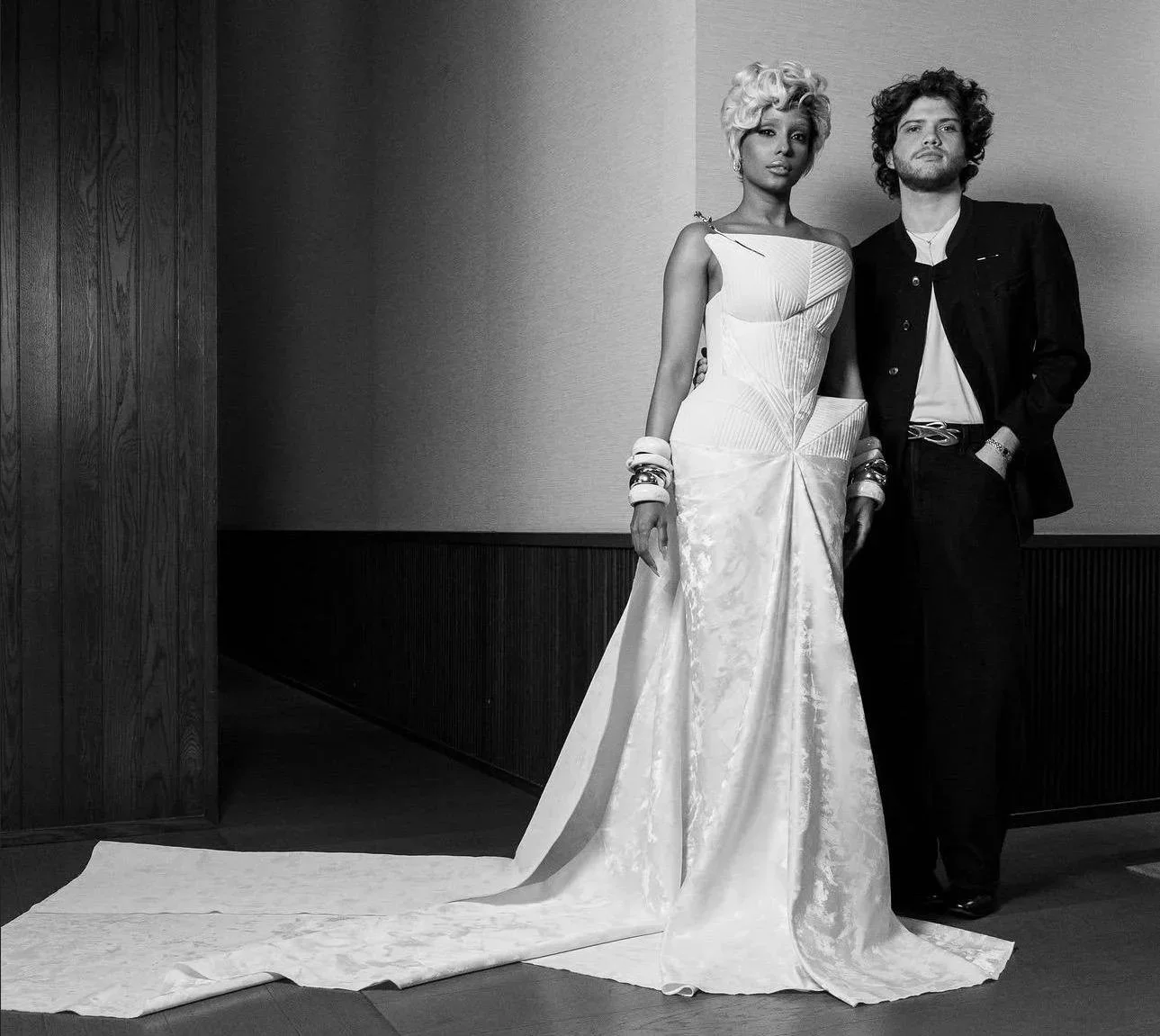
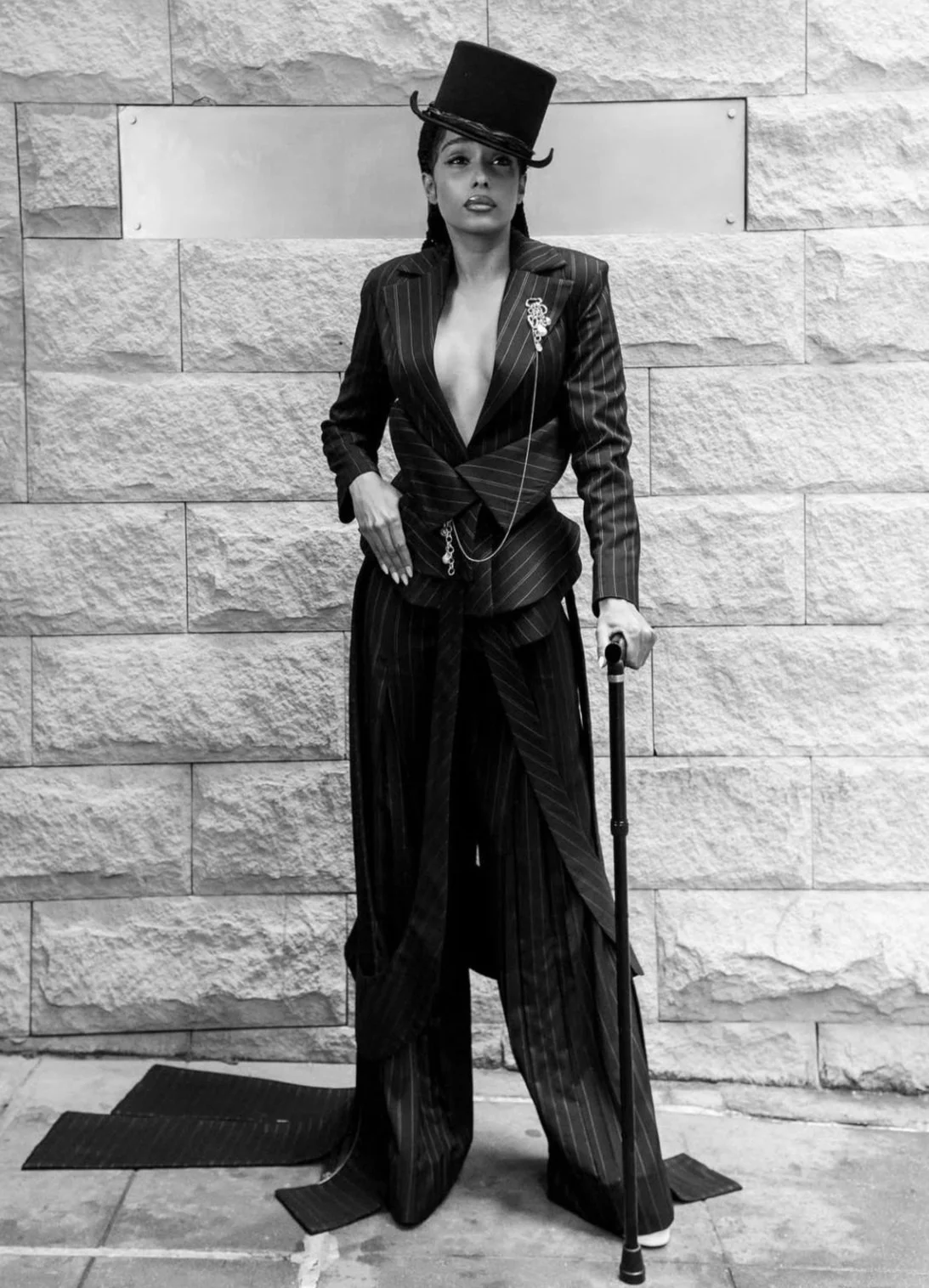
JOSÉ: Honestly? The portfolio I’m building. I’ve worked across different categories. Technical work, corporate work, Met Gala work, womenswear, menswear, made-to-measure. For a long time, I thought of myself as only creative, and I almost interpreted that as the opposite of being smart. Now I look at everything I’m accumulating and realize I’m building evidence of how many things I know how to do.
FREDDY: The toolbox again. You also told me you feel hopeful about fashion as a whole.
JOSÉ: Yes. For a while I felt as if fashion was almost dead. Somewhere between the 2010s and the early 2020s, it felt flat. Now I feel designers are making clothes that excite me again. They feel crafted. They respect tradition while still feeling fresh. Fashion slowly feels alive again. Not yet though.
FREDDY: I feel something similar. There is a niche of people who are willing to say, “No, this isn’t good.” They care where things come from, what the intention is, whether something deserves attention. You don’t necessarily need to afford high fashion to want it to exist. Sometimes witnessing extraordinary art is enough.
JOSÉ: Exactly.
FREDDY: You know the designer you want to become. What kind of designer do you refuse to become?
JOSÉ: I don’t want to create something that doesn’t speak to the level of my knowledge. Whether we’re talking about commercial or high fashion, I never want to make a product that isn’t reflective of how good of a designer I know I can be. I started doing this when I was around thirteen. I’ve done too much to accept less from myself now.
FREDDY: Which brings us back to the beginning. You entered through theatre. The technical knowledge, the commercial knowledge, the construction—have essentially been giving you tools with which to build those same imaginary worlds.
JOSÉ: Exactly. It’s still world-making.
VI— LAST QUESTION.
FREDDY: Forget fashion. Forget art. You are simply a human being. What is one beautiful thing you hope humanity never loses?
JOSÉ: Empathy.
JOSÉ: I think that empathy is the biggest problem we are facing as a society. The lack of understanding for each other is consuming collaboration, relationships, the environment, wildlife, and human contact. The same way we talked about patience earlier, I think the combination of these two represents the biggest threat to us humans and the world as a whole. I hope this is something humankind never loses because the second we do, everything along the way suffers with us.
FREDDY: Which is interesting because three hours ago you told me beauty was humanity’s greatest necessity.
JOSÉ: I still think it is.
FREDDY: But perhaps the point of seeing beauty is learning to see each other.
JOSÉ: Maybe.
EPILOGUE
Sometime after listening to the conversation once again, I found myself thinking less about José and more about what it means to be an artist. An artist looks at what everyone else has already seen, yet insists there still is something there. He questions the answers we have become comfortable with. He knows enough about the past to respect it, but never enough to become obedient to it. Grace Coddington learned to keep her eyes open—to watch, to look, to absorb, and eventually return it all to the work. Perhaps one of the first gifts an artist is given by birth is the sensibility to see.
Agnes Martin spent twenty years before arriving at the visual language that spoke to her; Marina Abramović has made endurance itself part of creation. Susan Sontag wanted us to recover our senses. Perhaps the artist is simply the person who never agrees to lose them. The artist survives by protecting that part of himself. The world will eventually ask him to be sensible, profitable, logical. Sometimes it will ignore him altogether. None of this makes the years spent looking, learning, failing, and becoming less important.
I closed my journal thinking that perhaps art begins with refusal, to see less, to feel less, or to accept the world exactly as it was handed to you. The artist keeps looking until something reveals itself, then leaves behind proof of what, for a moment, he saw. It’s a whirlwind of sensitivity, discipline, hunger, and—he was right about this one—a certain amount of madness. And by that definition, I believe José Martínez fits it perfectly.

WRITTEN & EDITED BY FREDDY ESPINAL