
MORAÏS: VÍSPERA
PROLOGUE
There is a peculiar intimacy behind encountering an artist before the world has decided what to make of them. No archive has yet been built. No retrospectives to consult, nor interview records from which to formulate interpretations. You are only left with the work, the artist, and your eyes.
This is how I encountered MORAÏS.
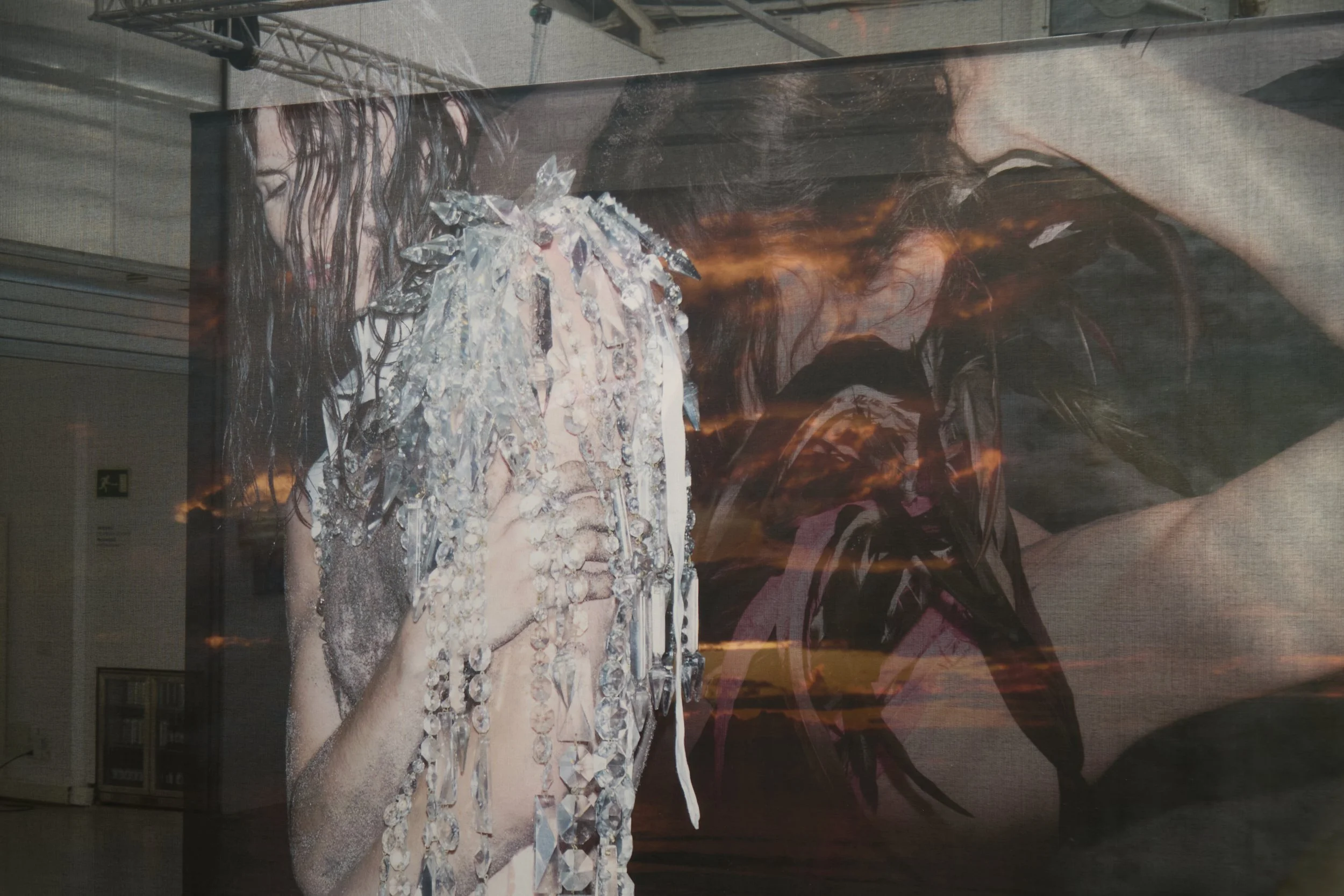
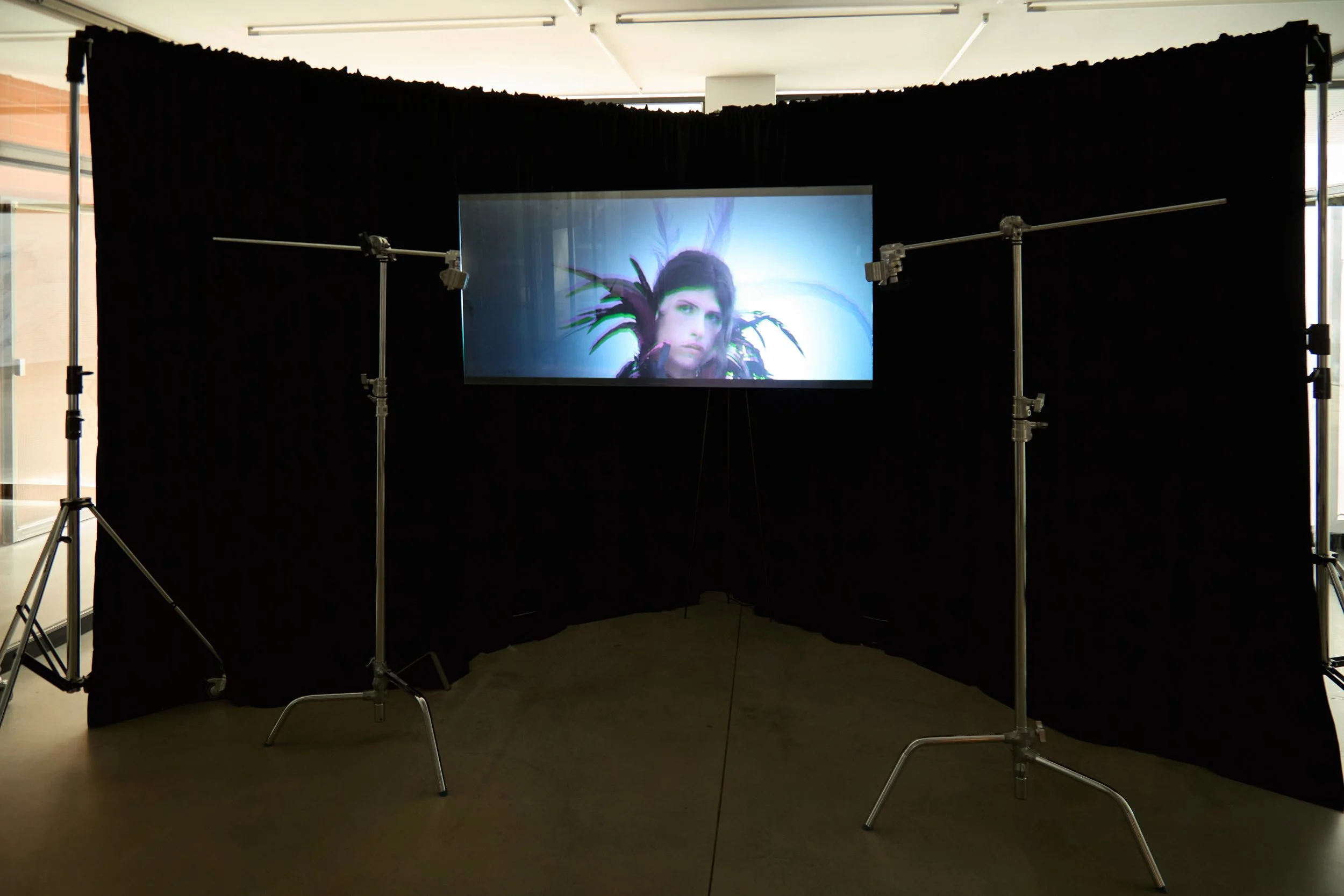
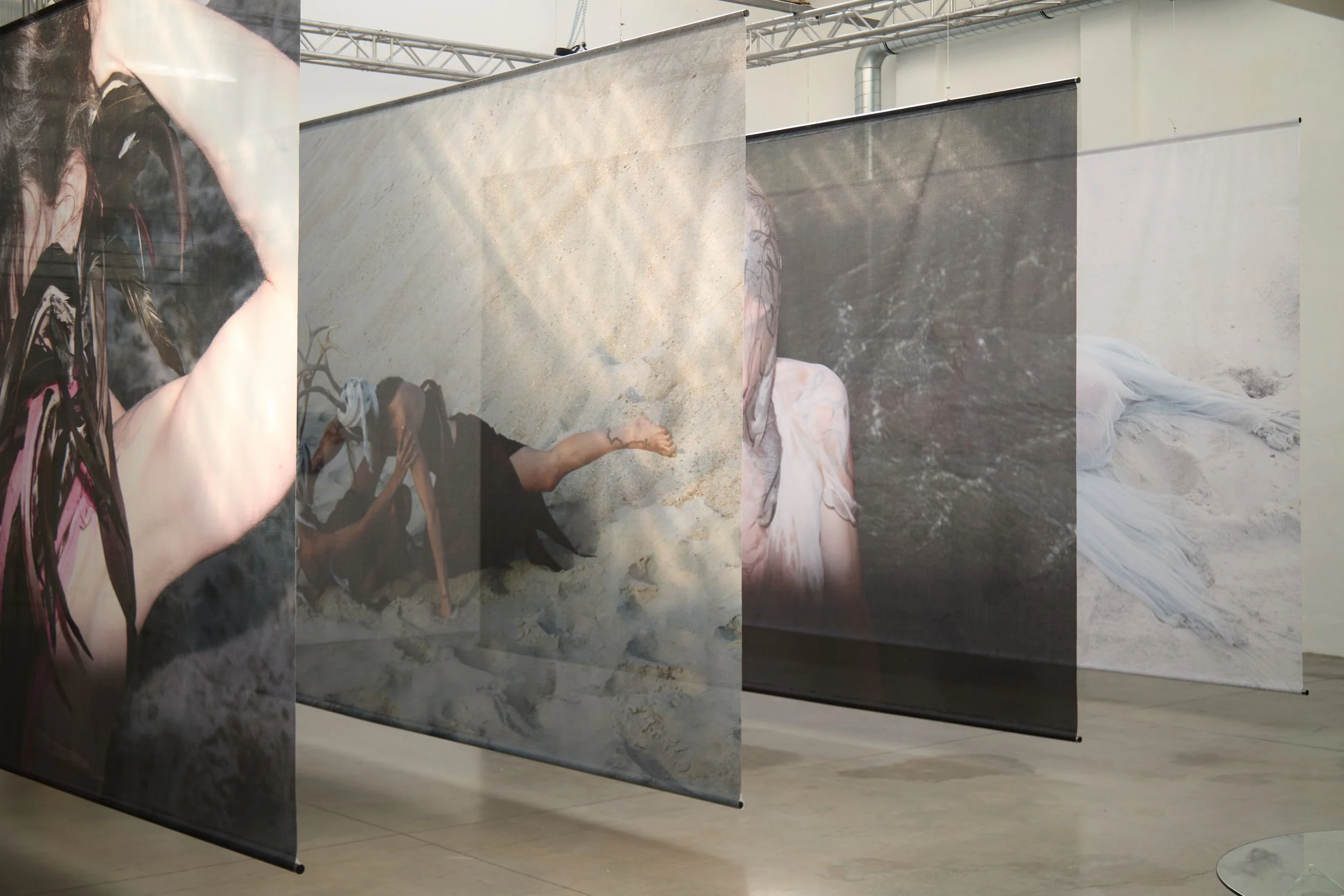
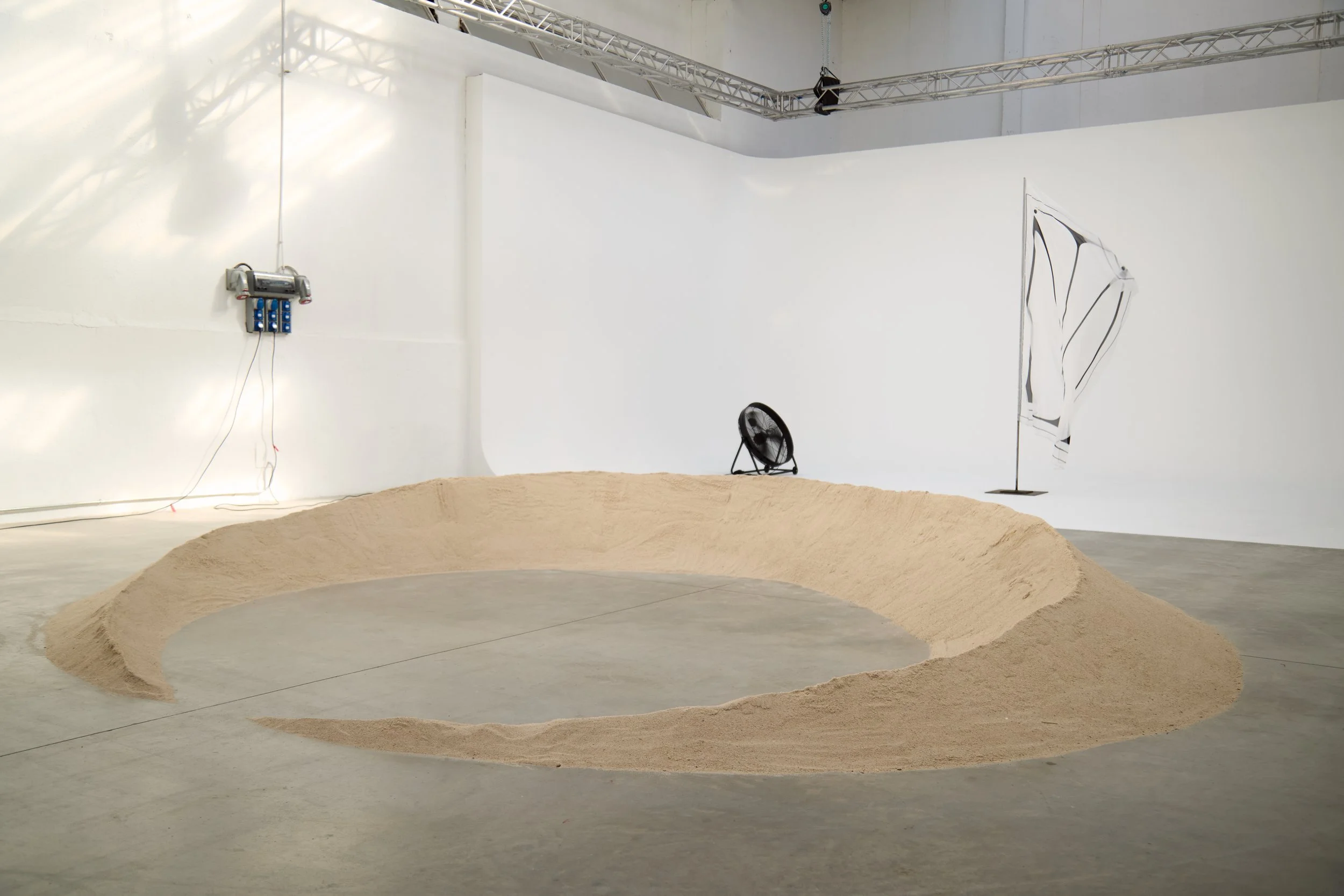
On September 19, in an industrial space in Madrid called La Mosca, Nara Moraïs presented Víspera, an eleven-look SS27 capsule and the first public appearance of a universe she has spent years constructing. Music, fashion, photography, and architecture were assembled around a dune of sand shaped like a waning moon. Large translucent photographs hung through the room like memories one could physically walk through, whilst a gentle breeze interacted with the fabrics, the sand, and the audience.
Víspera: the eve, the before.
MORAÏS originally conceived the project as an exercise preceding the first collection. It is a beginning that insists on calling itself the moment before the beginning: a young designer presenting herself to the world through a collection about not having entirely arrived yet.
There is something excitingly human about that proposition.
Nara was born in Simancas, Valladolid, in 2002. Her mother remembers her first word being baila—dance—uttered from a stroller while watching women pass in dresses whose colour, movement and drape fascinated her. As a child, she transformed her mother’s scarves and heels and constructed entire collections from a bedsheet. She began sewing at sixteen and later trained in dressmaking, pattern cutting and construction. Before MORAÏS, her practice moved through styling, production and creative direction, including work with Samantha Hudson, Lola Rodríguez, Laura Weissmahr, Los Javis and many more.
Víspera is divided into five movements. They correspond to five stages of an interior journey and to the changing light of a single day on a beach in Portugal that has accompanied Nara throughout her life.
FUGUE
I. NACIMIENTO
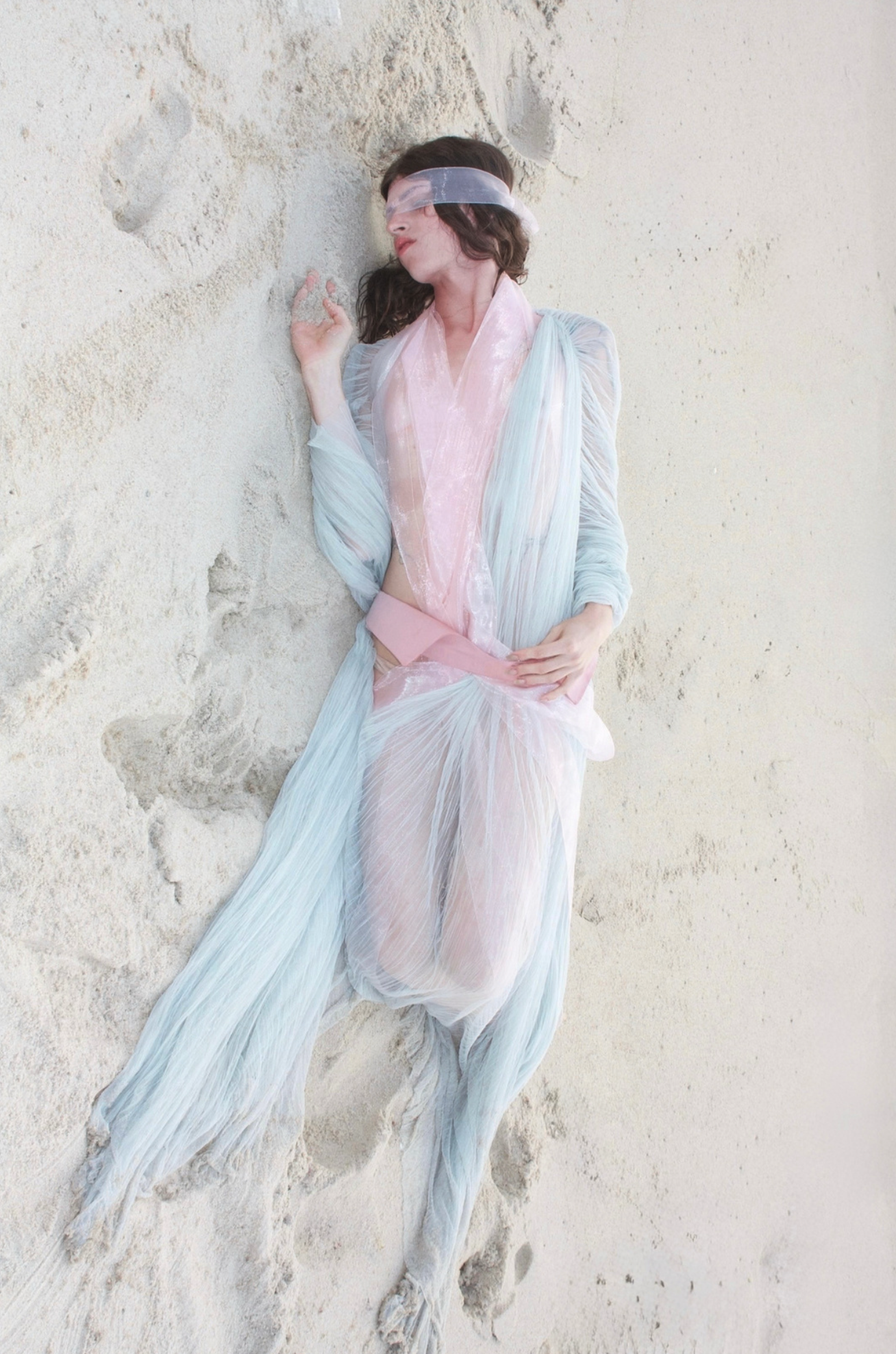
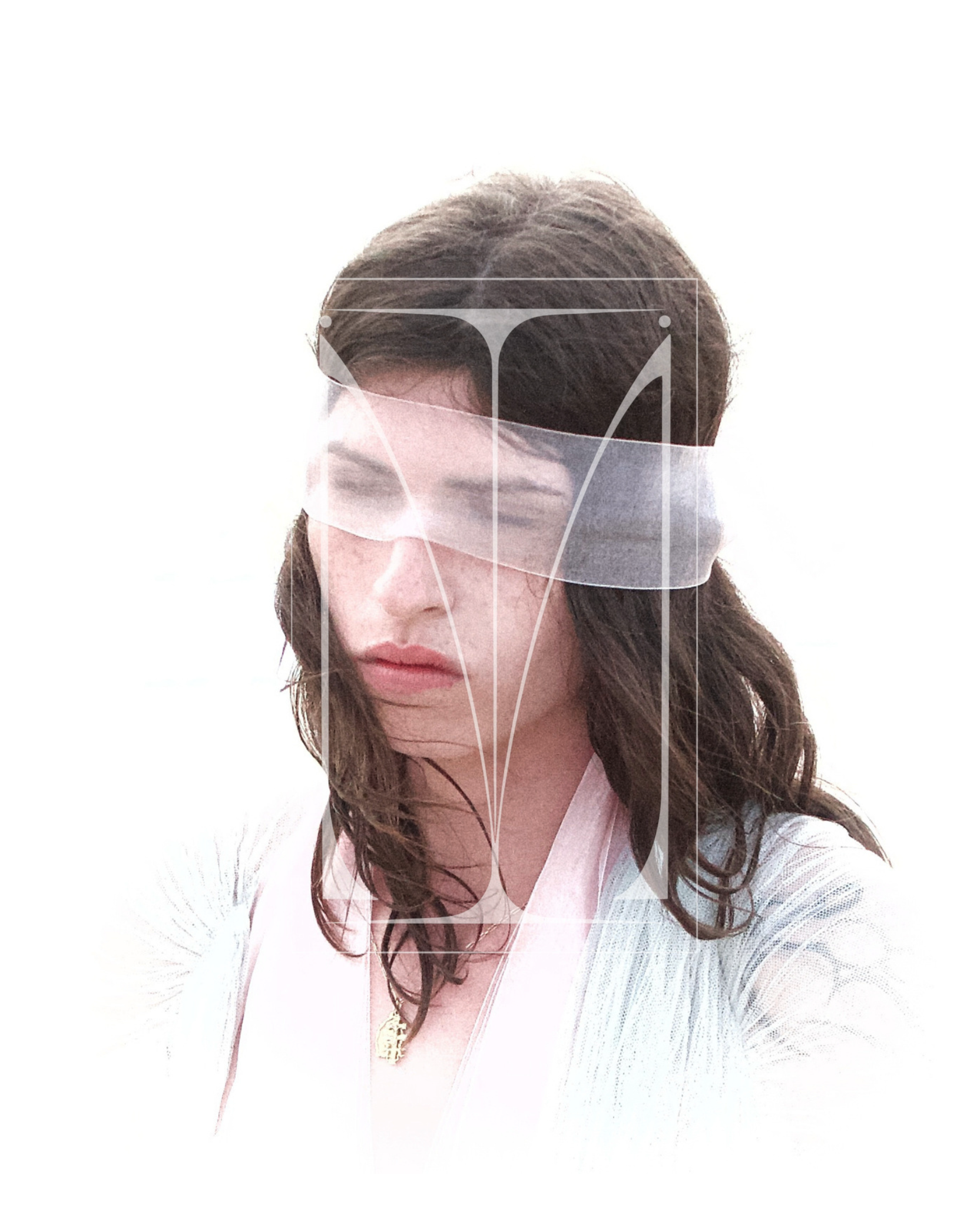
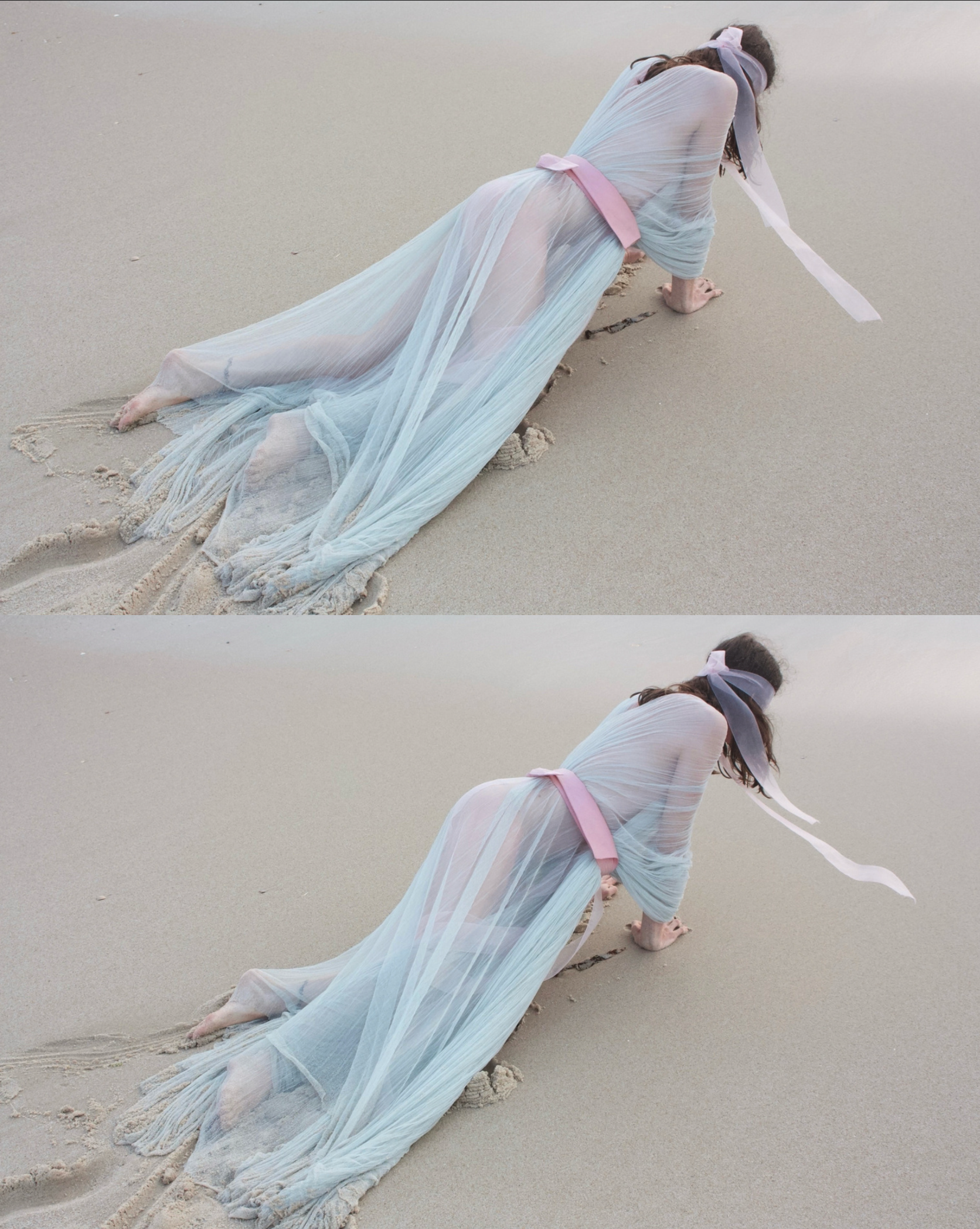
A body lies against almost colourless sand. Powder blue and pale pink layers of translucent fabric trail behind it. Eyes covered, the figure crawls, drags itself, and leaves marks and trails. It looks less like somebody wearing clothes than somebody learning what a body is. The body is never simply the apparatus upon which the collection is displayed. It becomes one of its materials.
Knots and wrinkles become construction devices; pieces of fabric gather themselves around the hips, torso and shoulders, their transparency allowing flesh to appear and recede. The technical proposition is deceptively primitive: begin with material, manipulate it as little as possible, and discover what happens when it encounters a living form. In simpler words—the treatment of fabric as a newborn itself.
Fashion currently suffers no shortage of garments desperate to demonstrate that they have been sophisticatedly designed. Víspera quite occasionally does the opposite. Its ecosystem of muslins, gauzes, taffetas, cottons and moirés is allowed to fall, wrinkle and misbehave. For Nara, the collection investigates her encounter with femininity across childhood, adolescence and her present life as a trans woman. She does not describe that history as a clean metamorphosis from one person into another. The earlier selves remain. They accumulate over the same body.
And so birth occurs blindfolded.
The self exists before it knows how to see itself.
II. DESCUBRIMIENTO
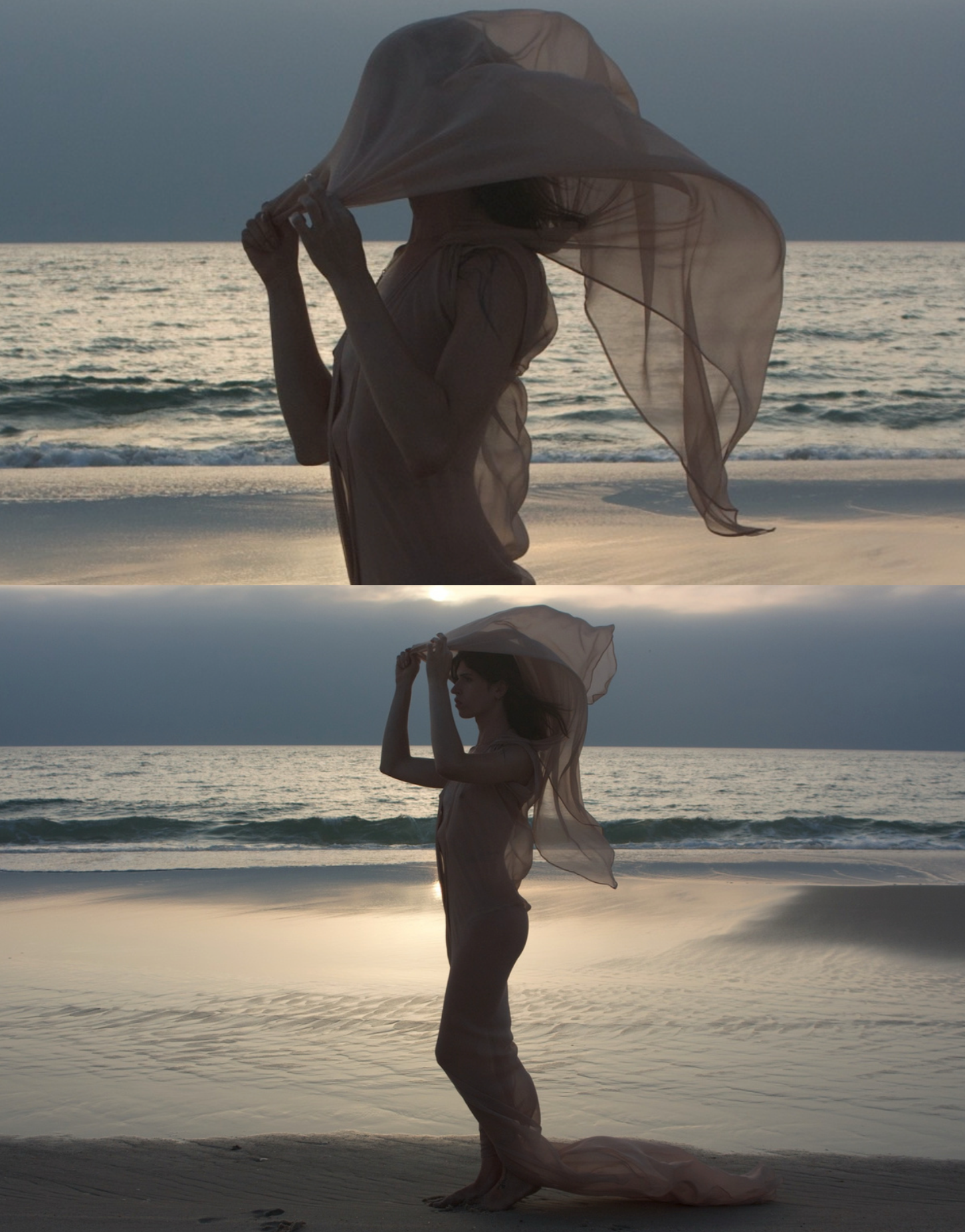
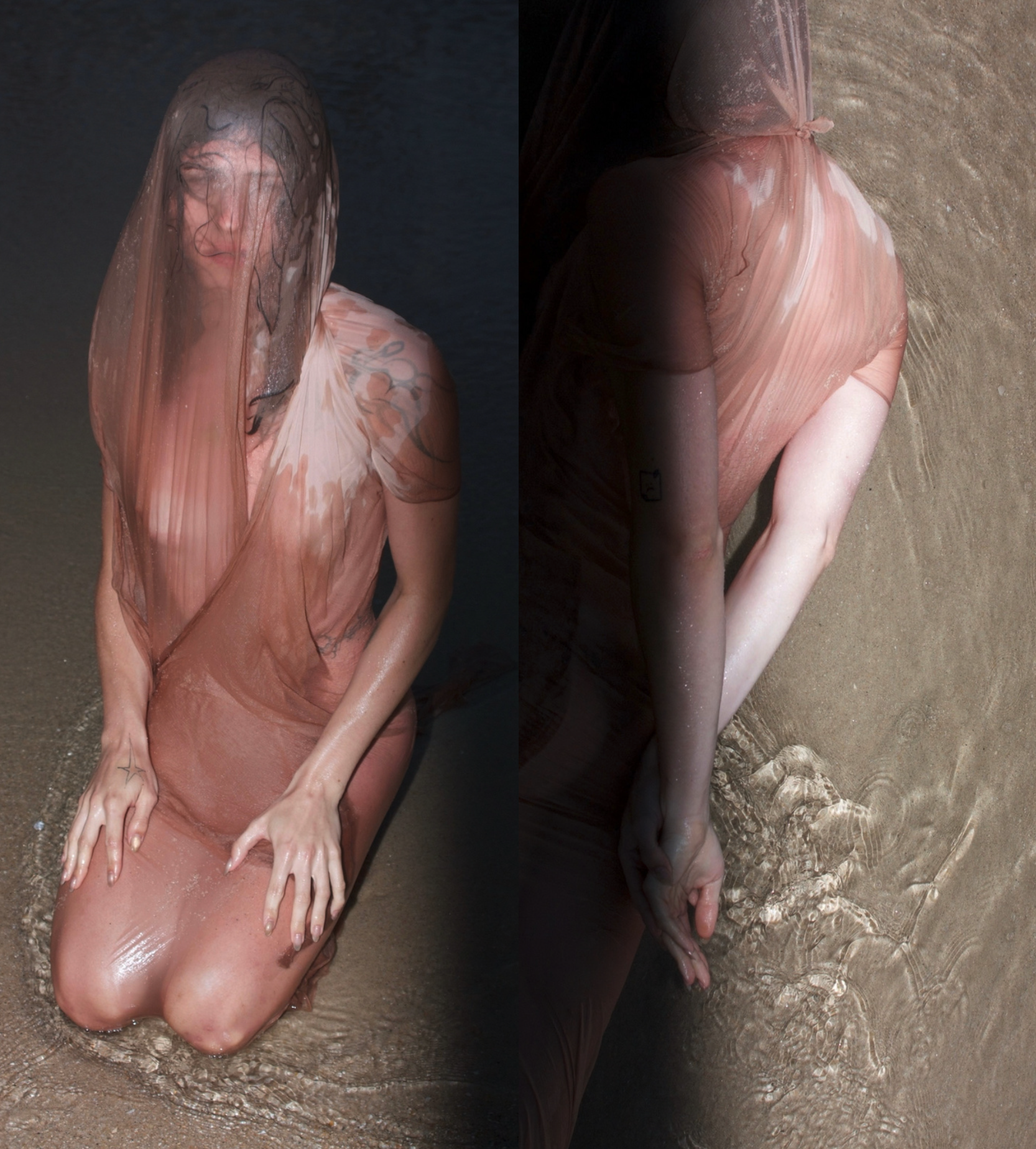
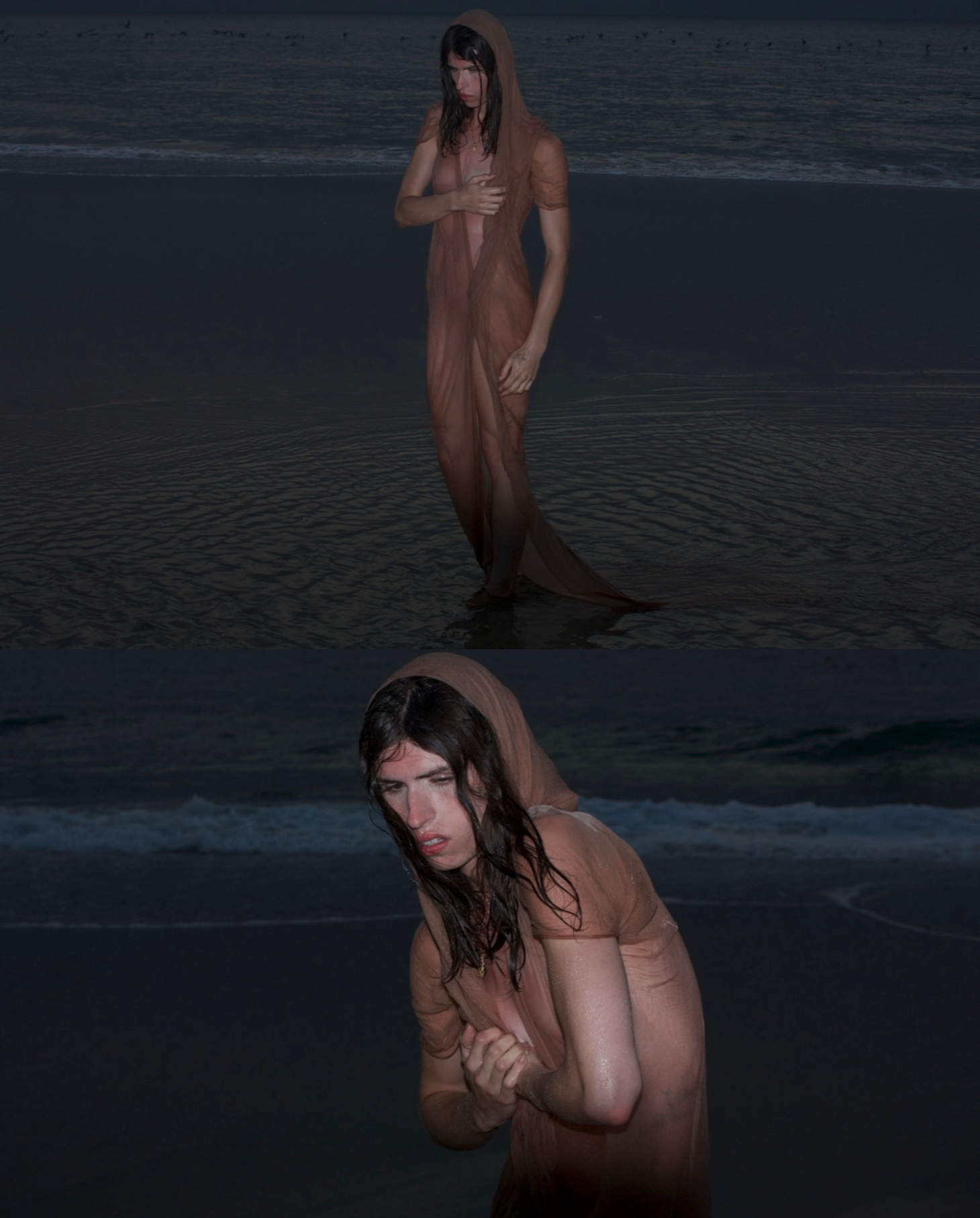
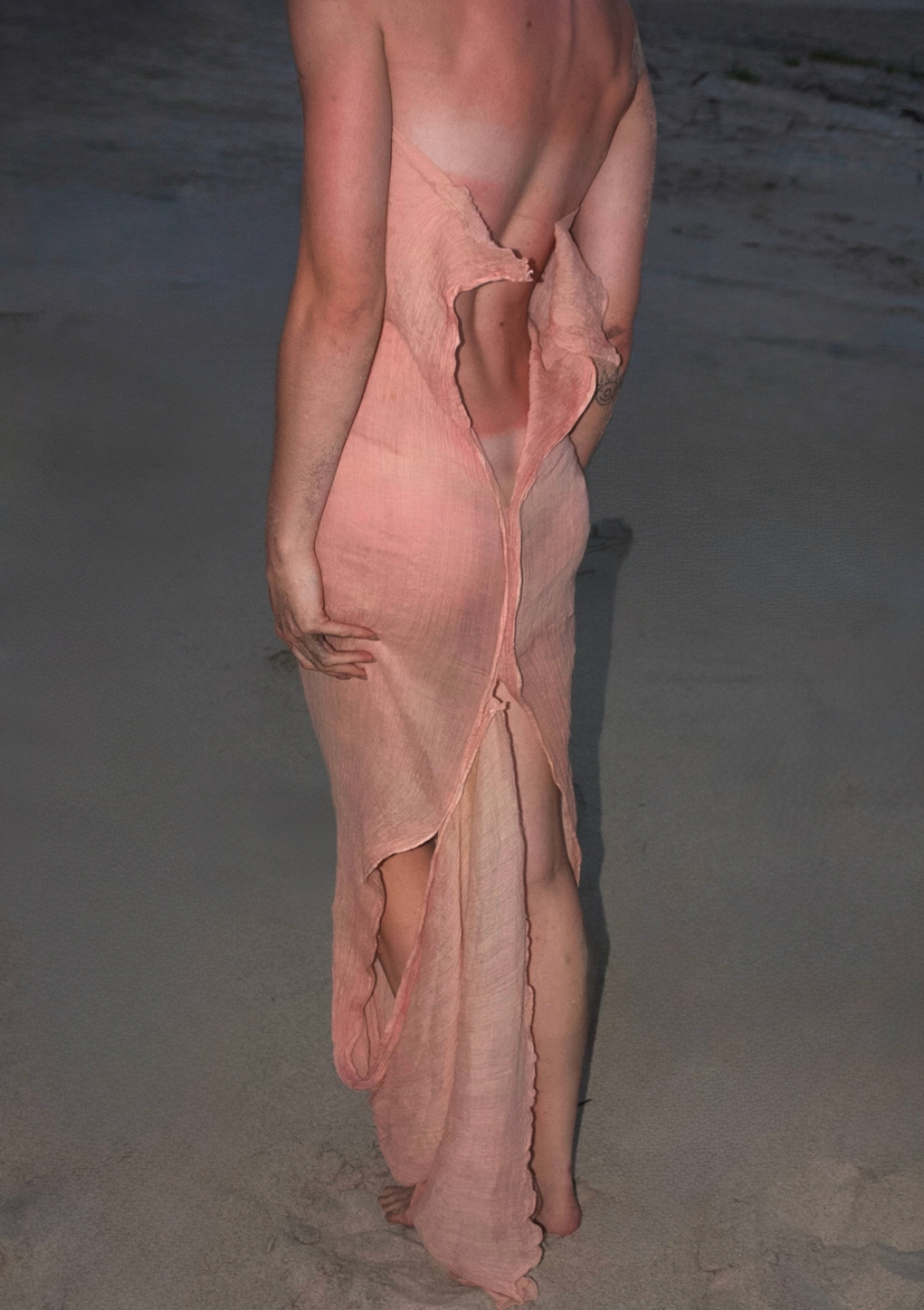
Flesh-coloured fabric clings wetly to the skin, sometimes covering the face, sometimes pulled away from it. The light grows harsher. The figure stands. It moves and occasionally looks. If Nacimiento is about possessing a body before understanding it, Descubrimiento begins the uncomfortable act of recognizing it.
This is where Nara’s transparencies become more interesting than a vague take on sensuality. They negotiate with what is allowed to be seen. The body can be revealed without necessarily being understood. The garment becomes a membrane between the public and private self. And the delicacy is never immaculate. Gauze sticks to the canvas. Fabric drags through water and collects sand. Beauty is allowed to become exhausted, unstable, even slightly deranged.
The campaign understands this particularly well. Nara’s women do not appear to have simply arrived at femininity. They look as though they have had to travel through something or somewhere to possess it.
III. LUCHA
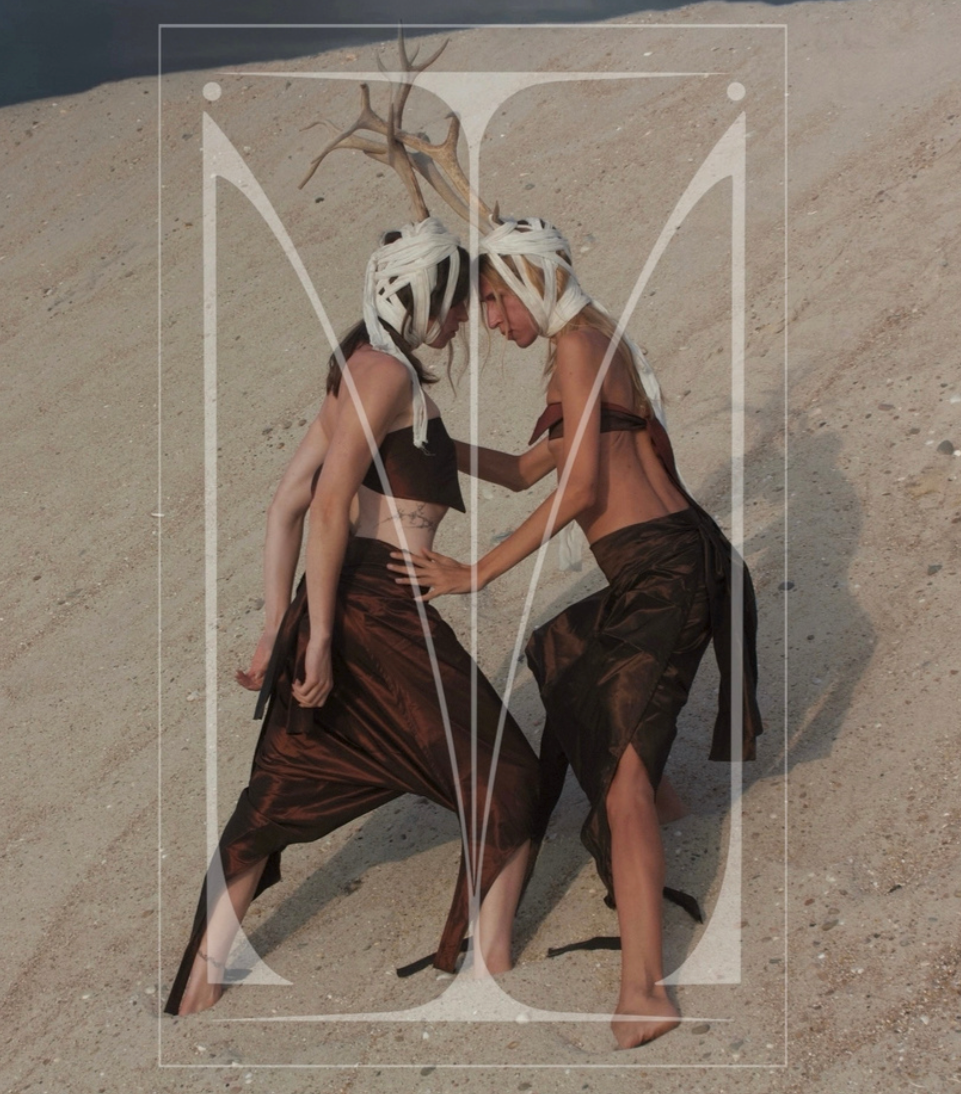
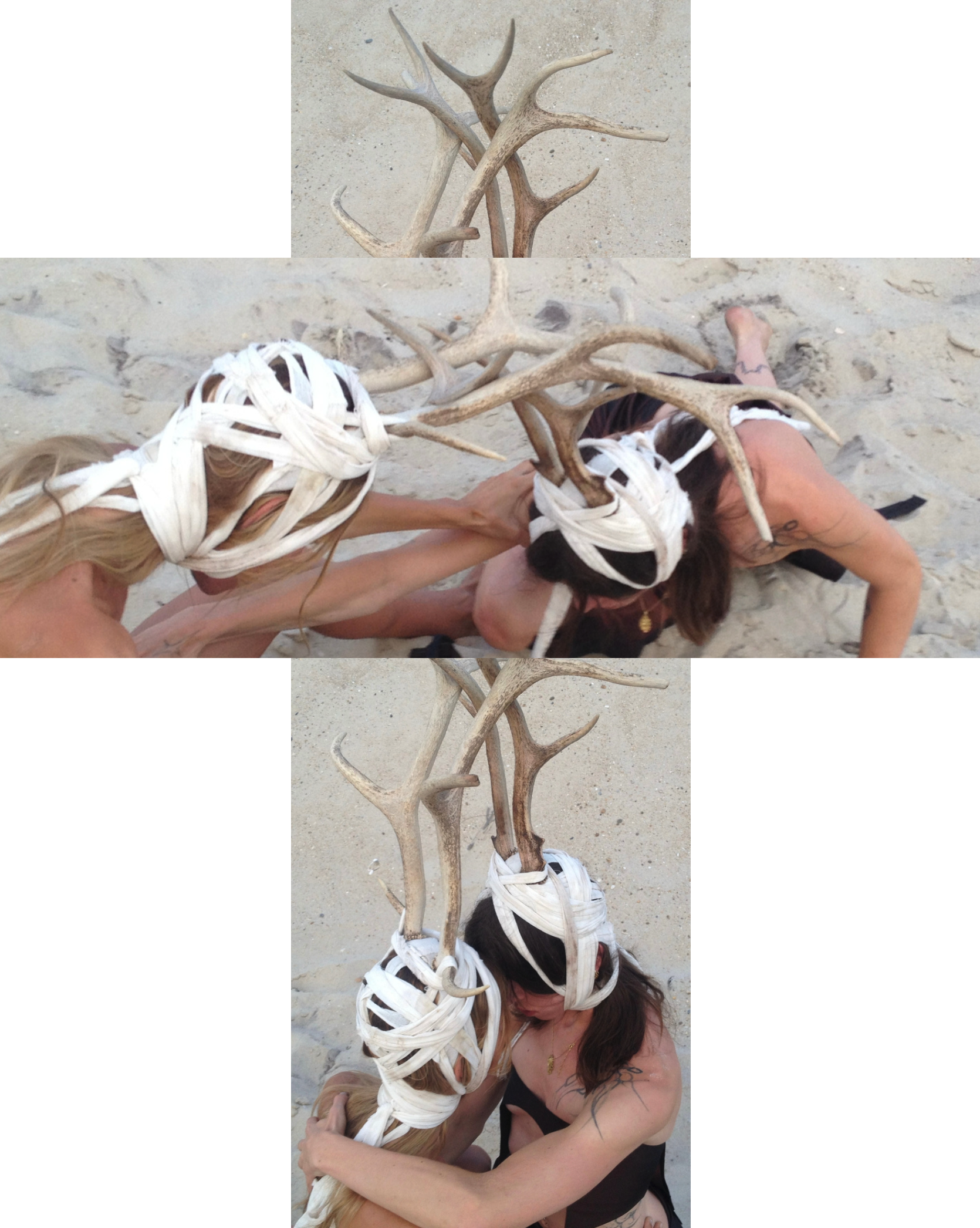
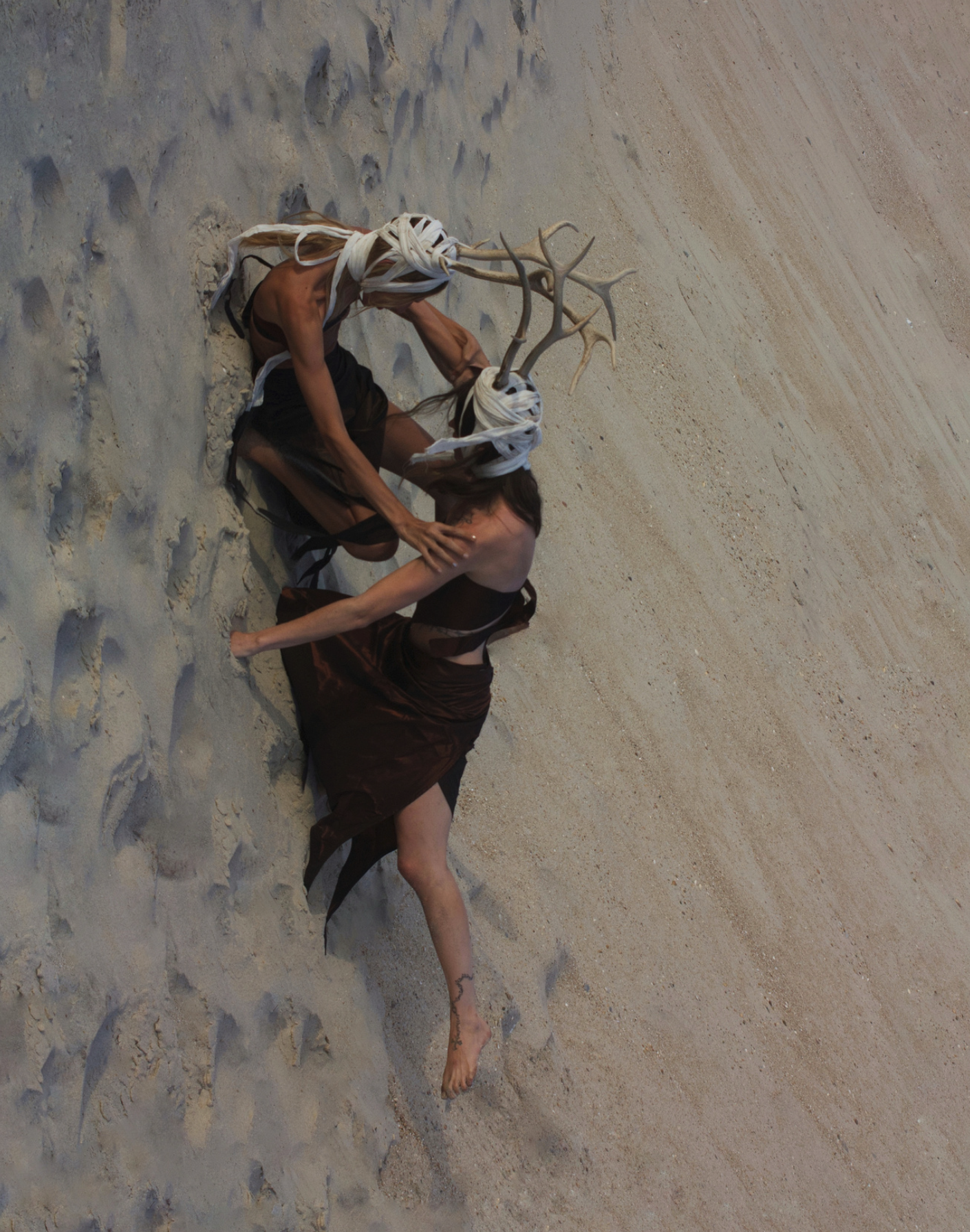
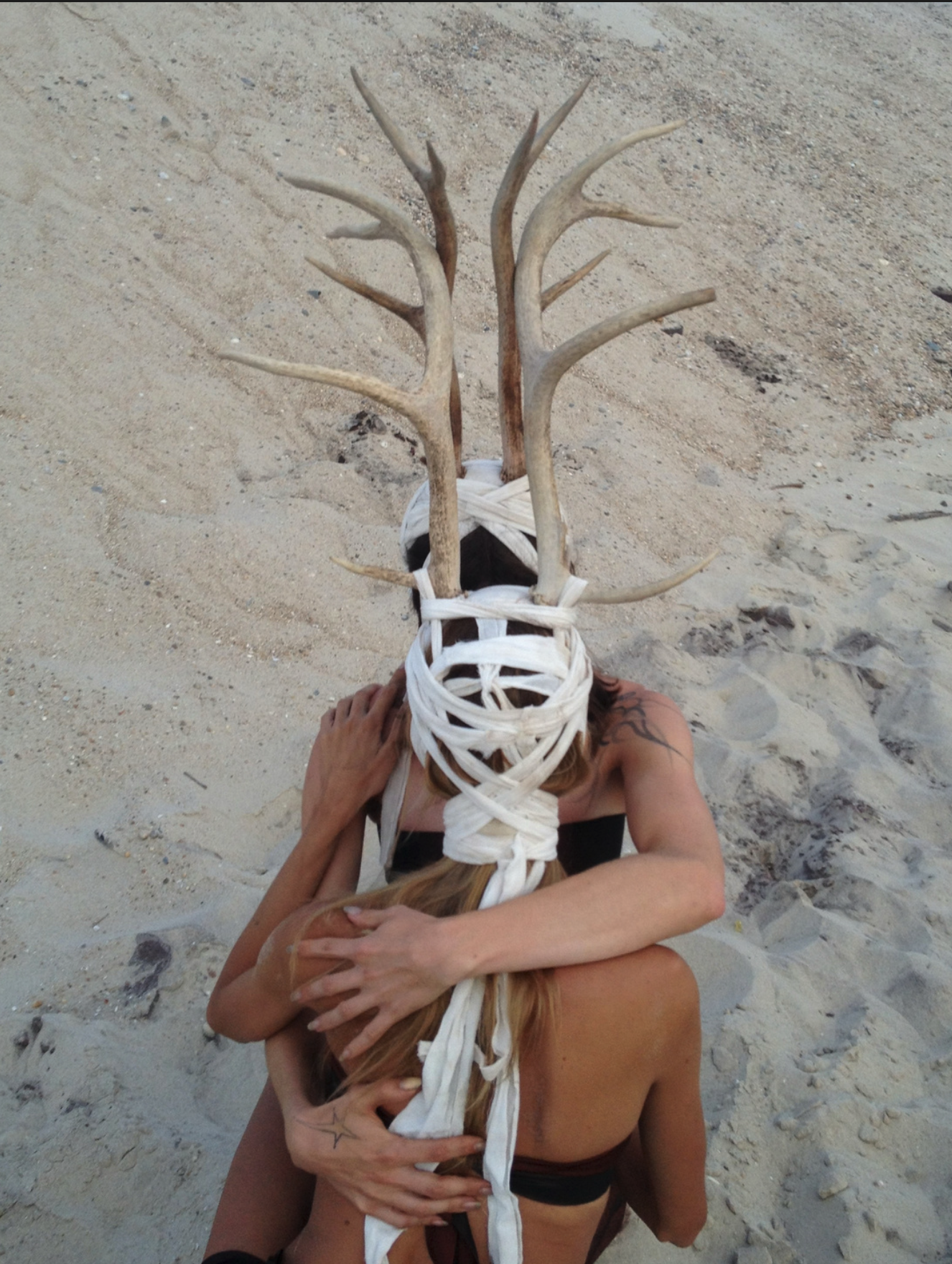
Two bodies appear wearing dark, abbreviated garments and enormous antlers wrapped in pale gauze. They grapple whilst their horns collide. Hands seize heads and torsos. Yet eventually that clashing violence becomes difficult to distinguish from an embrace.
It is one of the collection’s most intelligent images.
Struggle is rarely as simple as only fighting. Sometimes the thing across from us is another version buried within ourselves. Resistance against desire. Nara told me that the five movements travel from birth toward acceptance. Seen in that context, Lucha occupies precisely the place it should: at the zenith, under the most unforgiving light, when there is nowhere left to hide.
The soundtrack reinforced that tension. Drawing on Nara’s background as a DJ, six pieces moved through different languages, memories and emotional climates: Pippo Spera, Air, Sade, João Bosco, Bliss and Locust. She spoke to me about music that seems about to break under its own tension yet somehow never does; about departure, absence and return. That logic describes the collection surprisingly well. Nara goes backwards in order to go forward: back to a beach, back to childhood, back to the instinctive way she touched fabric before she understood what clothing could become.
To call that merely a good use of nostalgia would be a gross understatement.
IV. COMUNIÓN
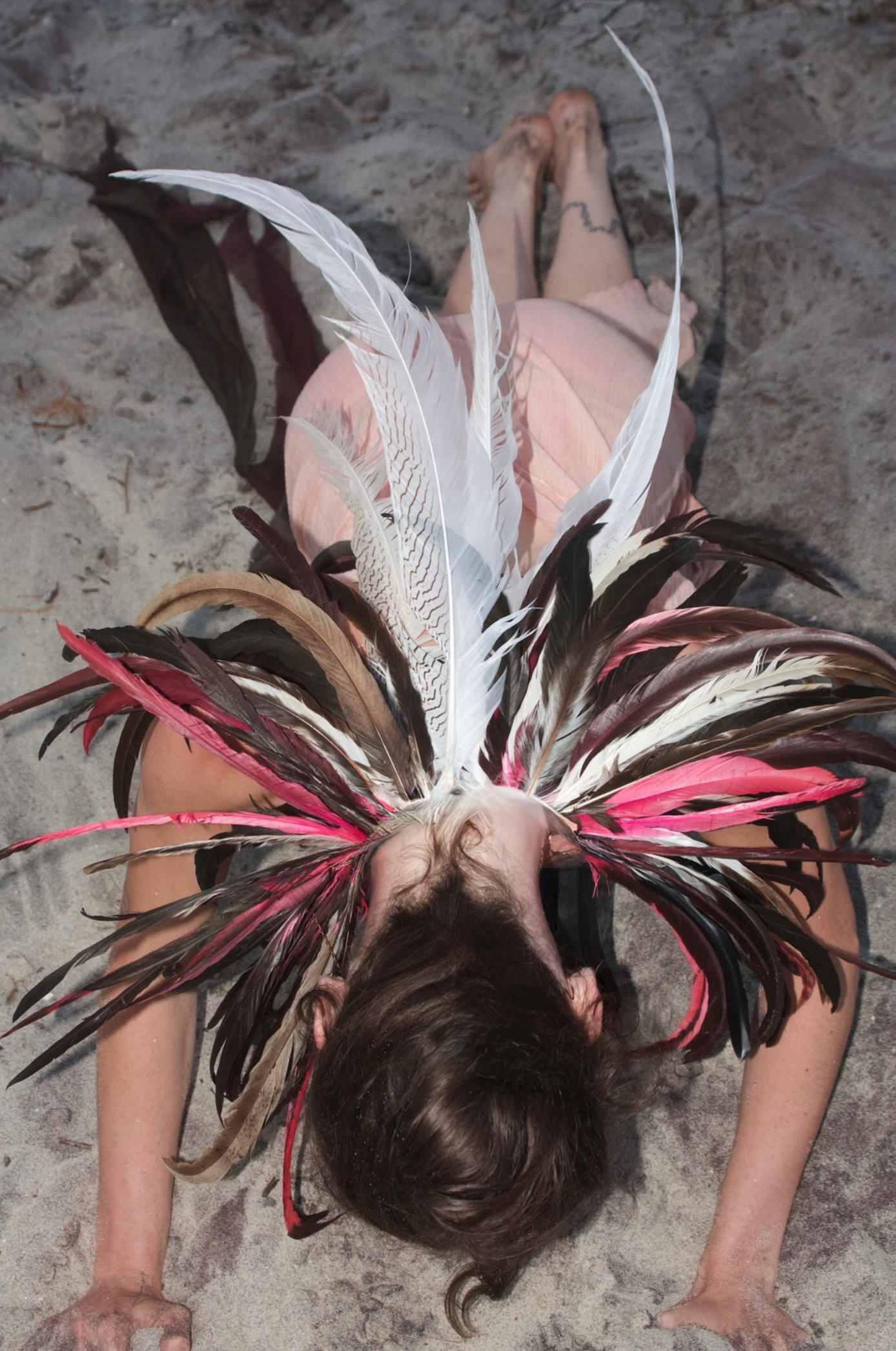
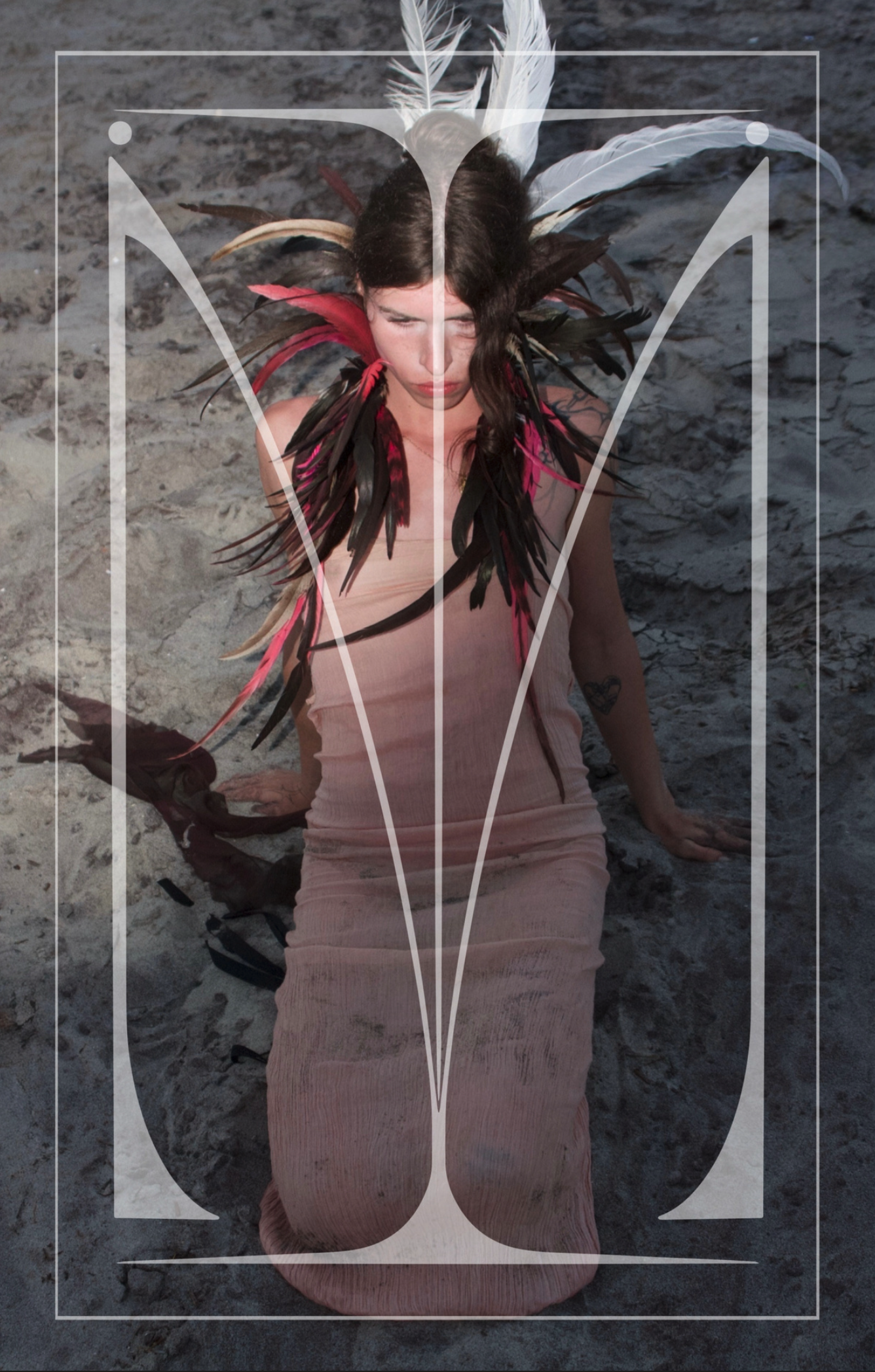
Feathers gather around the body in black, white, blush and fuchsia. Their movement introduces something creaturely and tender after the dissonance of what came before. They are light enough to tremble with movement, almost capable of abandoning the body altogether. We tend to narrate transformation as conquest. Fashion certainly does: the new body, the new season, the new woman. Nara proposes something gentler. The previous selves are not eradicated. They are gathered.
Communion, then, might not be about victory over oneself.
Maybe it is about learning how to hold the hands of all of them at once.
V. ESCUDO
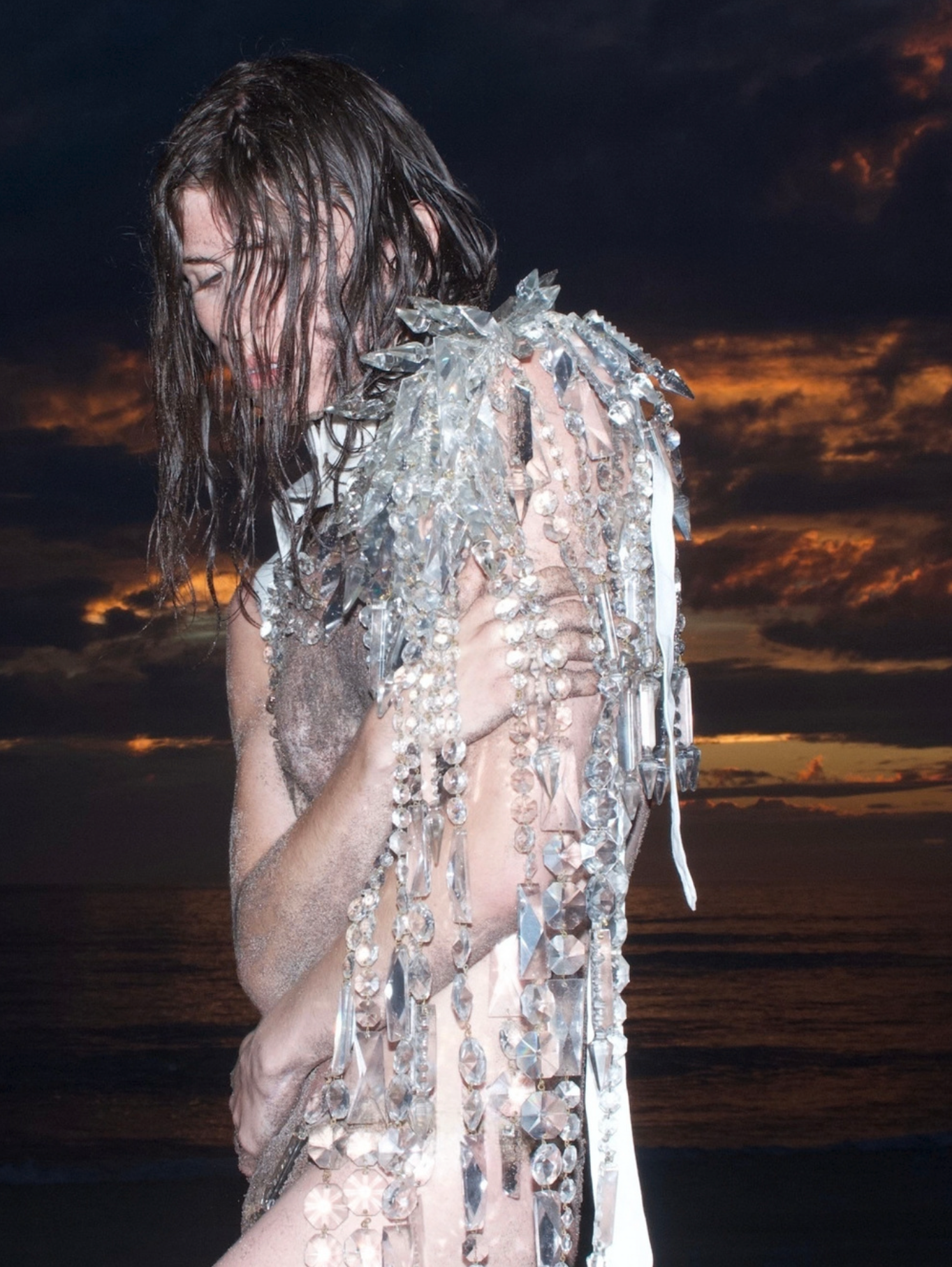
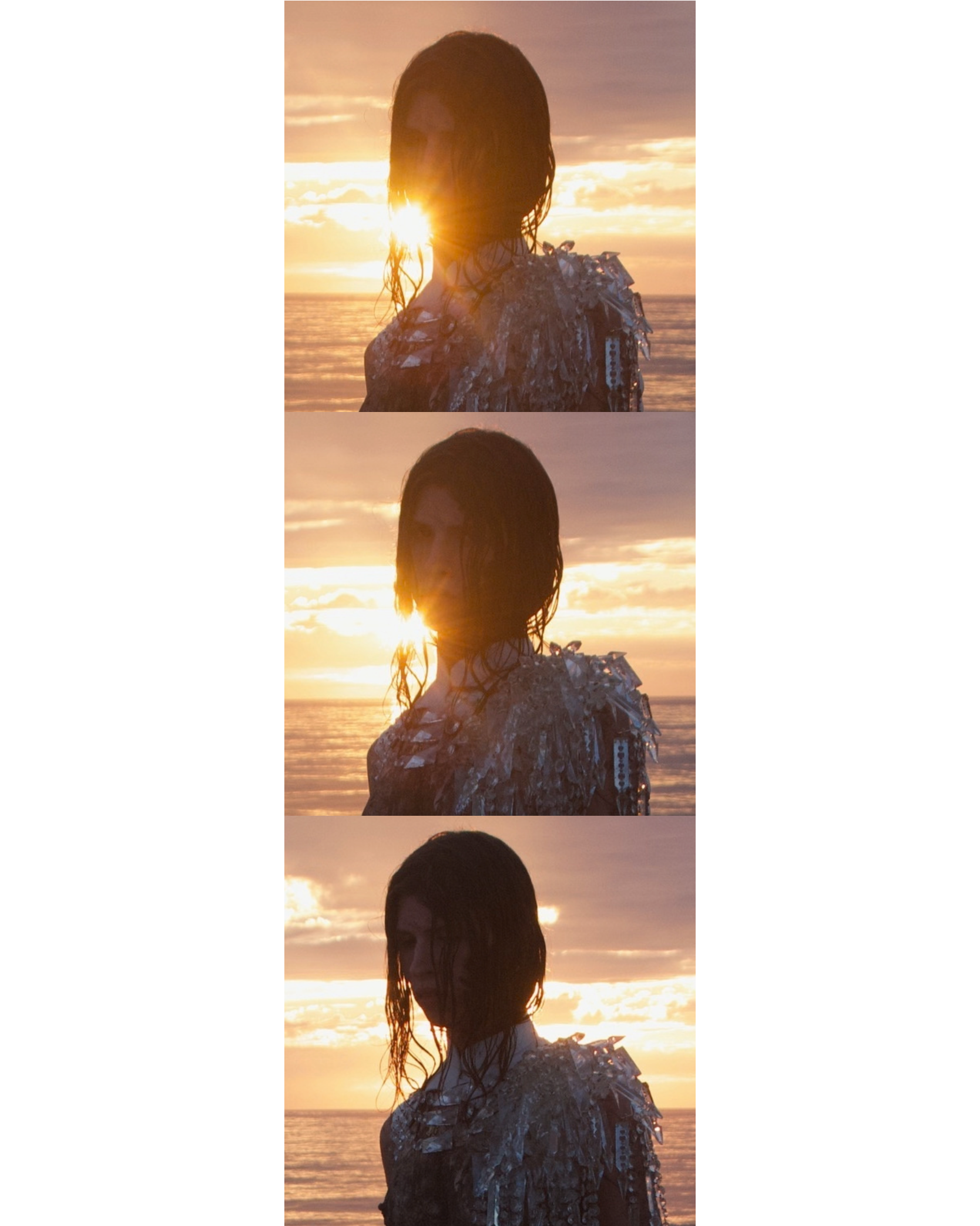
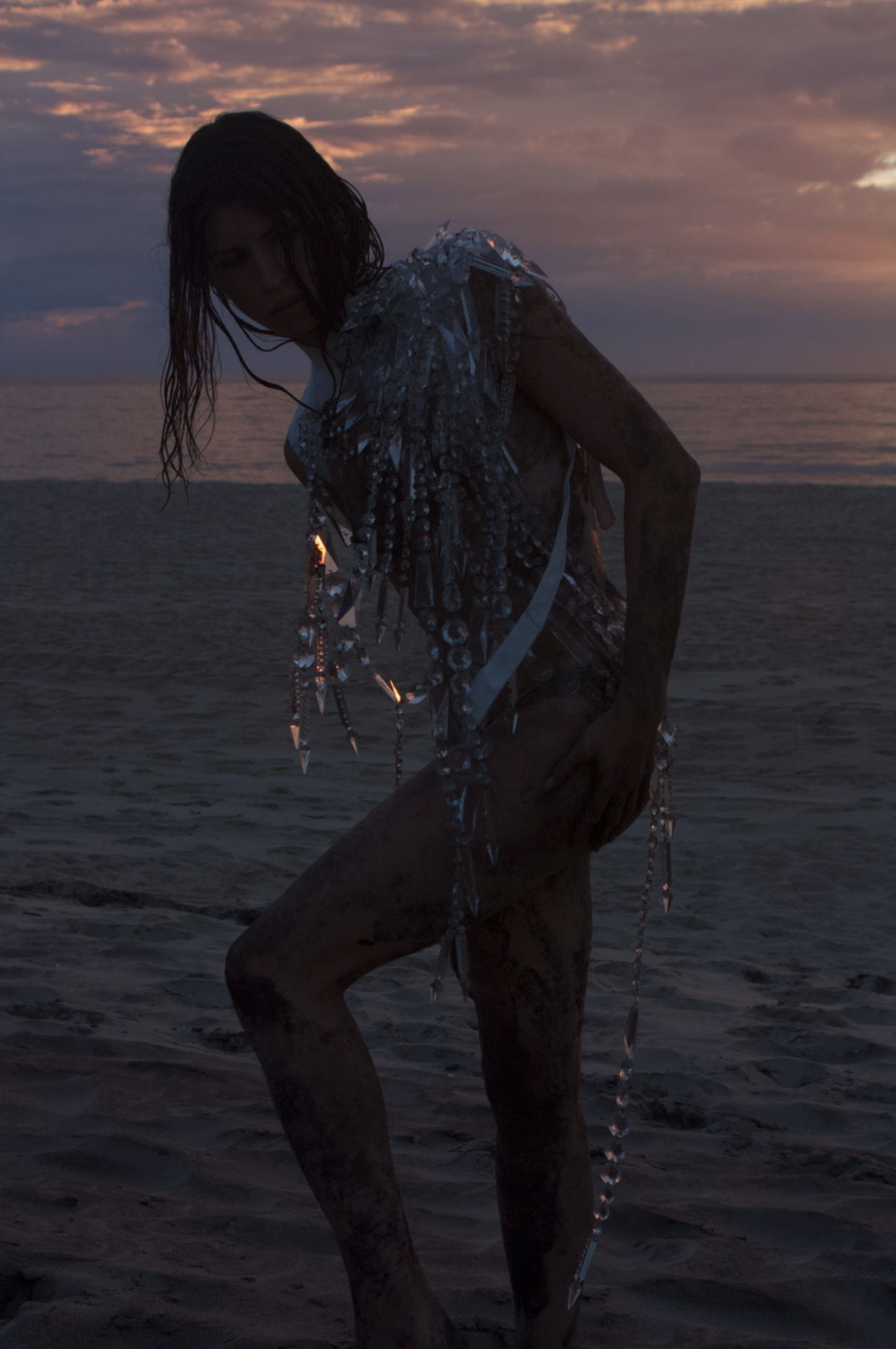
Against the last orange light of the Portuguese coast, the body appears almost naked beneath a crystal cascade. The piece was constructed from Murano glass taken from old vintage chandeliers. Its fragments fall across the shoulder and torso, heavy, fragile, and defensive simultaneously. When the wearer moves, the crystals produce a glimmering, bright sound. Nara describes it as something close to an alarm announcing a person’s arrival before they enter the room. She likes to think of the piece as a shield before love. After an entire collection in which fabric barely interferes with the body, protection finally arrives as weight.
And suddenly the material progression of Víspera becomes difficult to ignore.
The collection begins with fabrics that are soft, fluid and almost incapable of concealing the body. Gauze, muslin and transparency behave like states still taking shape: vulnerable to water, sand, movement and touch. As the five movements advance, the materials acquire increasing presence until, with Escudo, transparency itself has hardened.
The self develops, while the material develops with it.
What began as something barely able to hold its own form ends as crystal. Yet crystal is a strange material from which to construct armour. It can protect, but it can also break. It catches light precisely because light can pass through it.
MORAÏS has made vulnerability and defence out of the same material.
That may be the most complete expression of Víspera.
None of this would matter very much if the clothes could not carry at least part of the conceptual weight themselves. That is the danger of work this narratively complete. Give an artist beautiful photography, an autobiographical story, carefully selected music and enough poetic language, and one can easily mistake a persuasive atmosphere for persuasive design.
The brand will eventually have to prove that its identity can survive outside the beach.
I think Víspera contains the beginnings of that proof.
What interests me most about Nara is her instinct and ability to connect various mediums to put a piece of work together. She appears capable of translating an interior state across fabric, body, sound, image, and space without reducing fashion entirely to any one of them. The crystal is not compelling simply because it is beautiful; it completes an argument first introduced by almost weightless fabric. The antlers are not memorable simply because they carry a resemblance to McQueen’s brutalism; their collision makes psychological conflict physical. The beach is not only a beach in Nara’s creative process, but the system through which time, colour, and memory can be organized.
That ability—to give an emotion material consequence—is far more interesting to me than the premature construction of a recognizable aesthetic.
MORAÏS itself describes its identity as mutable, capable of changing materials, forms and processes while remaining within the same universe. That is a more difficult ambition than endlessly reproducing a recognizable silhouette. The question now is whether that instinct remains legible when everything around it changes.
It will take time and, of course, resources.
This collection was created by an emerging designer still discovering what production and distribution might eventually mean for the company, while remaining deeply involved in every dimension of its creation. What struck me during our conversation was the disproportion between the scale of the means and the scale of the potential. There is a brutal, ugly truth beneath fashion’s allure: too much talent remains trapped in poverty while too much mediocrity is being funded.
So when somebody can construct work this coherent with relatively little, the interesting question becomes what might happen if the vision is finally given the means to materialize itself more fully.
That is not a guarantee of greatness.
It is a reason to keep looking.
The more time I spent with Víspera, the less exclusively Nara’s it became. It is drawn explicitly from her story, her femininity, her transition, her fears and her desires. In her own words, it is a journey back toward her centre; she has described the capsule as the most beautiful and devastating love letter she has written—and the only one written to herself.
She told me:
“Anyone can wear the brand, but not everyone can wear any look.”
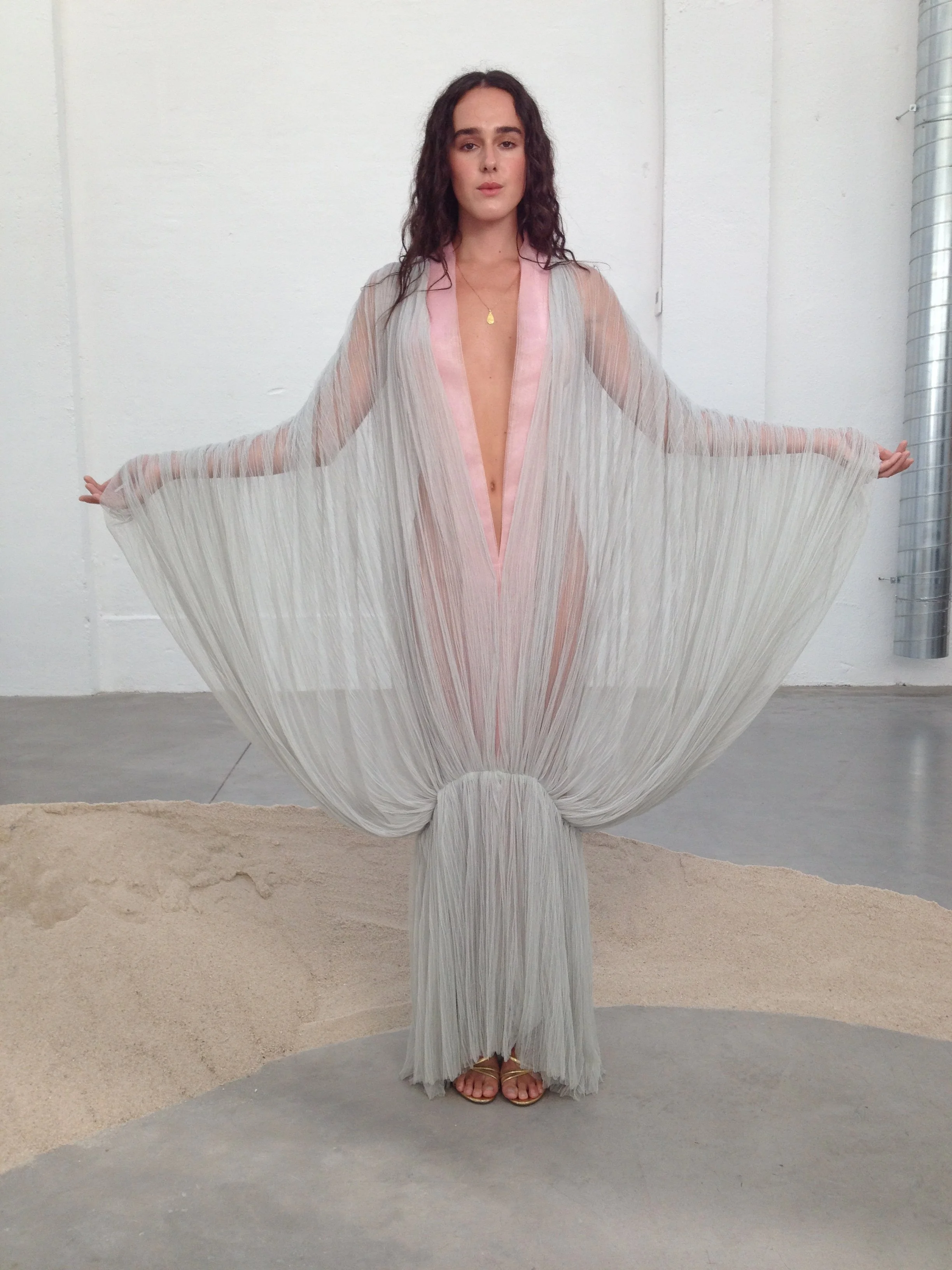
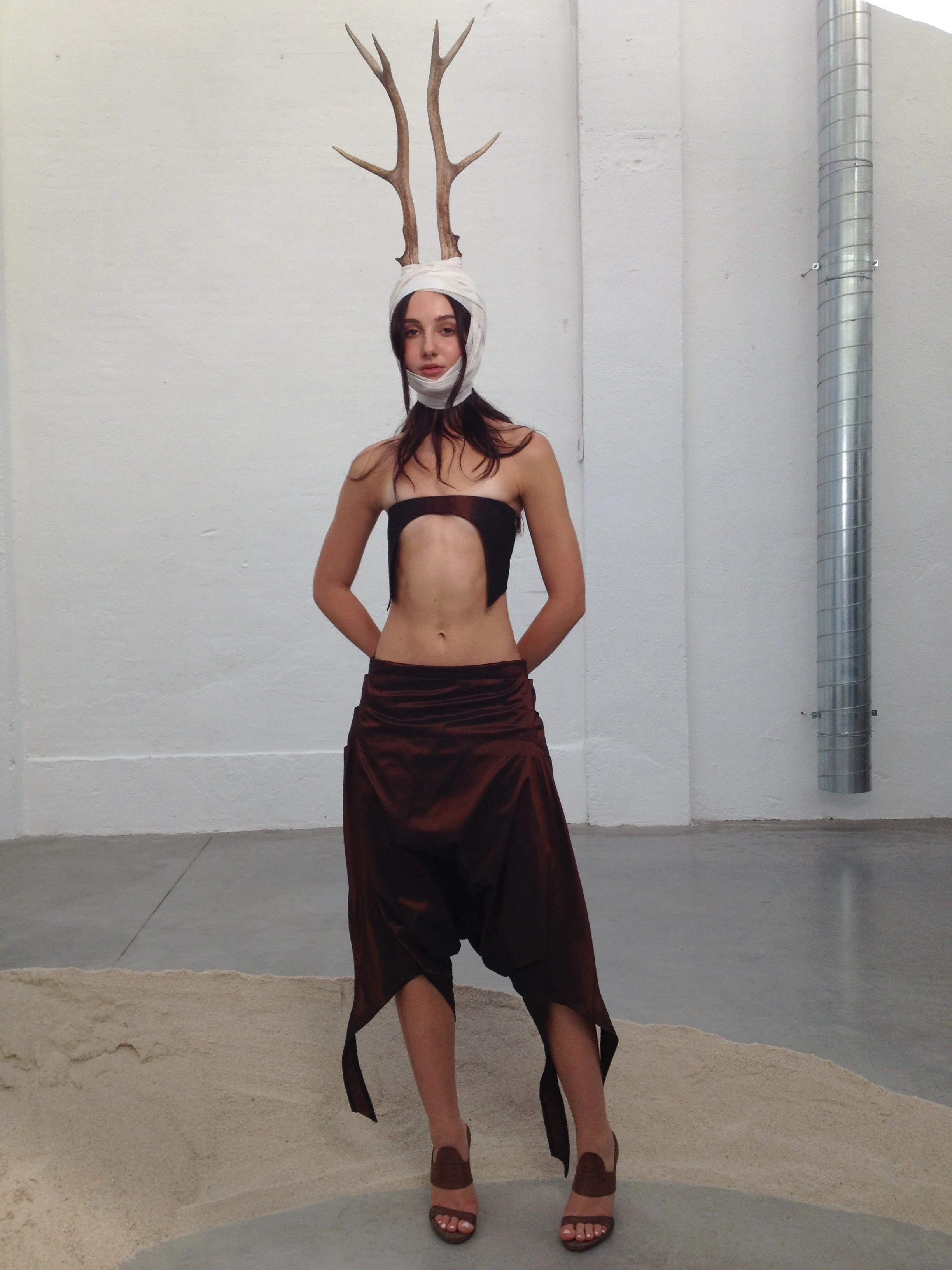
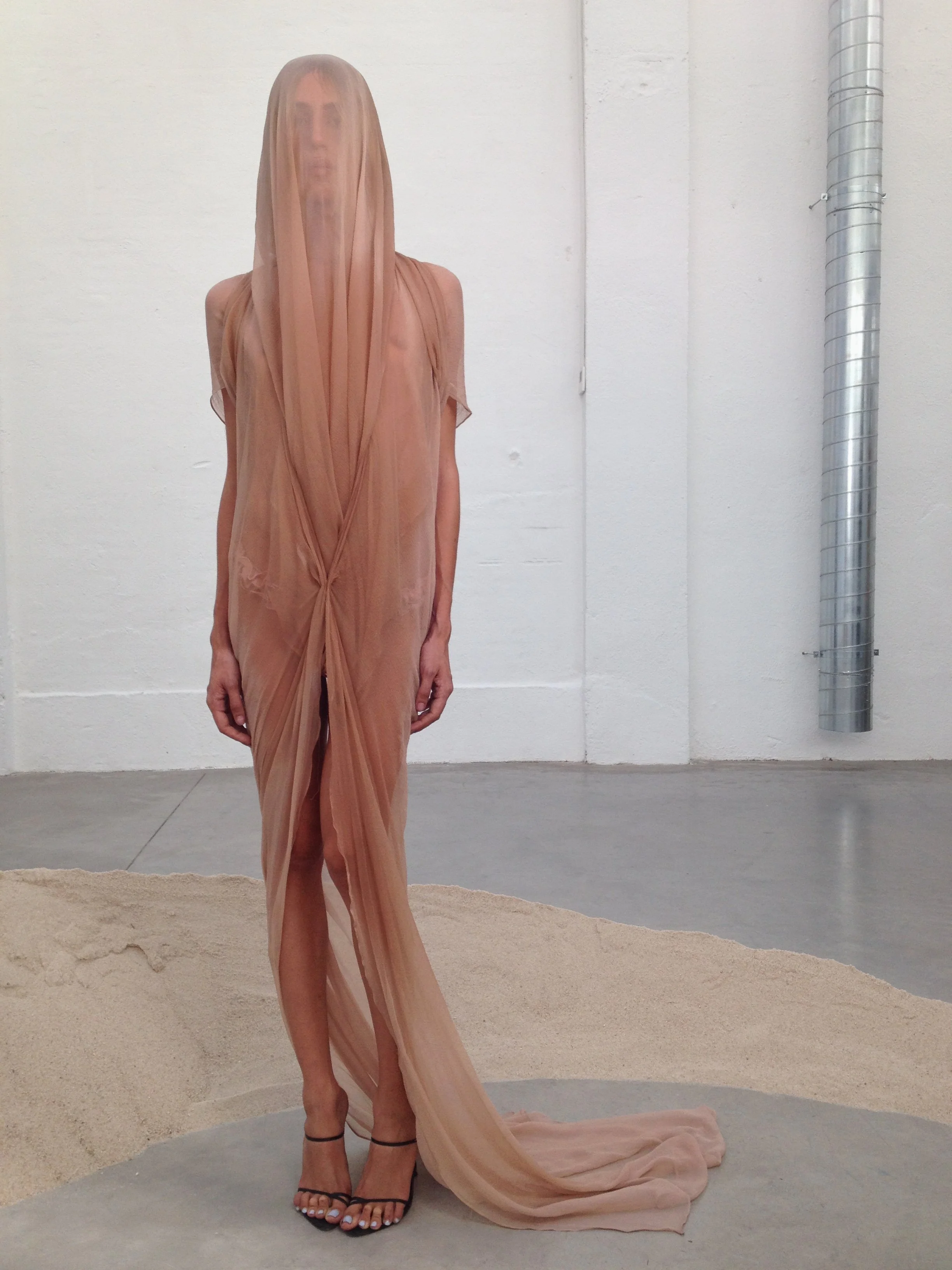
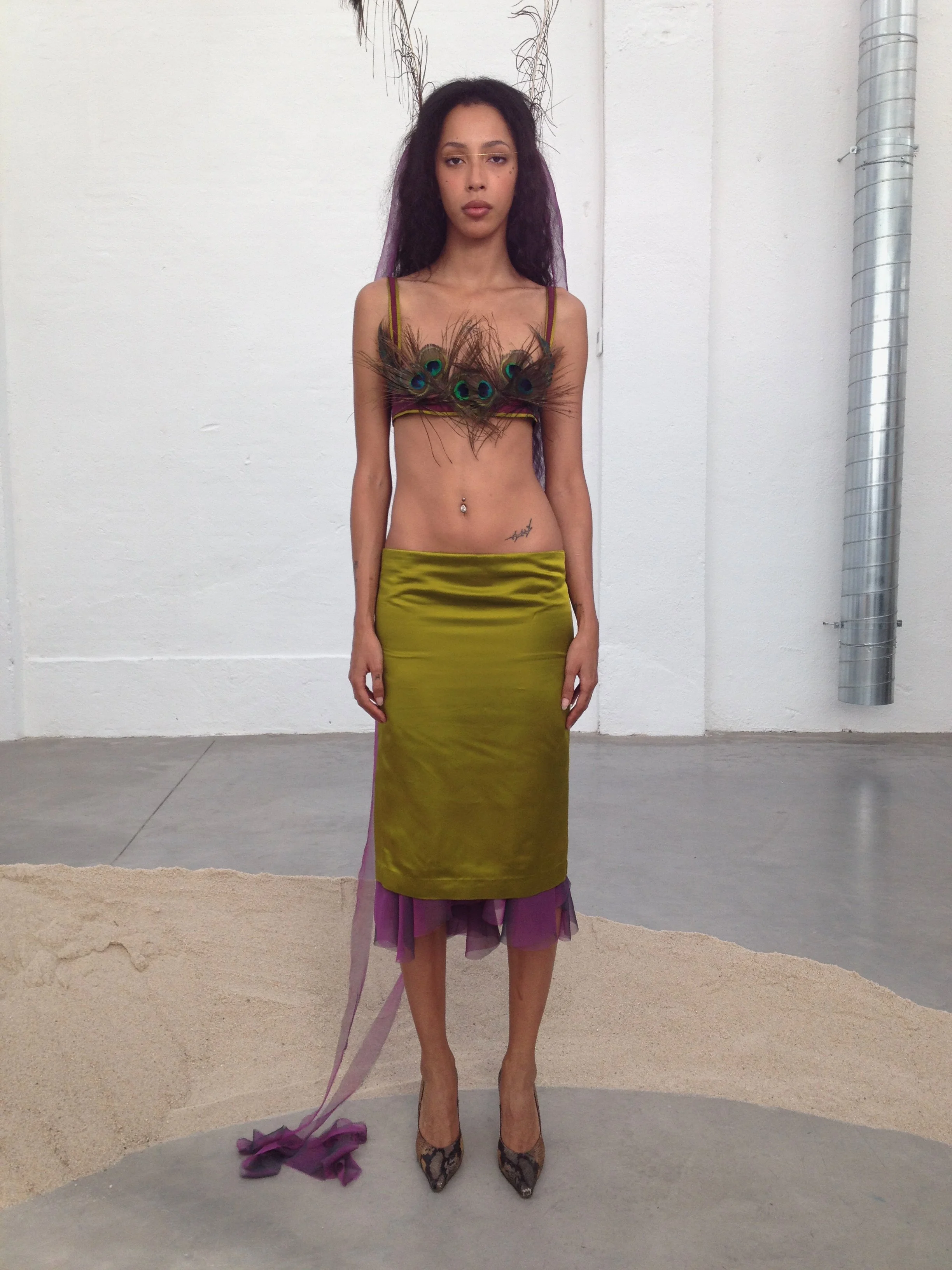
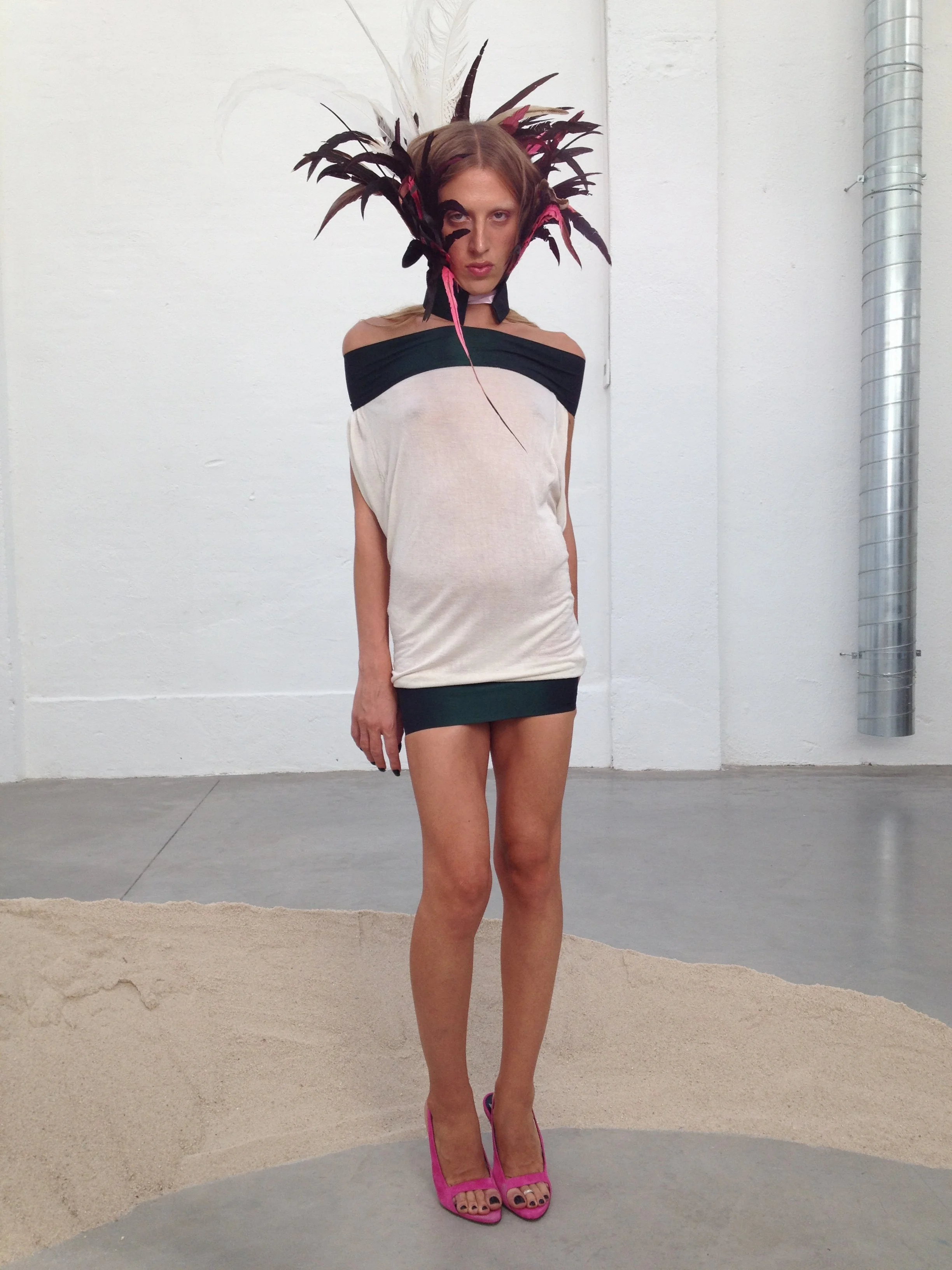
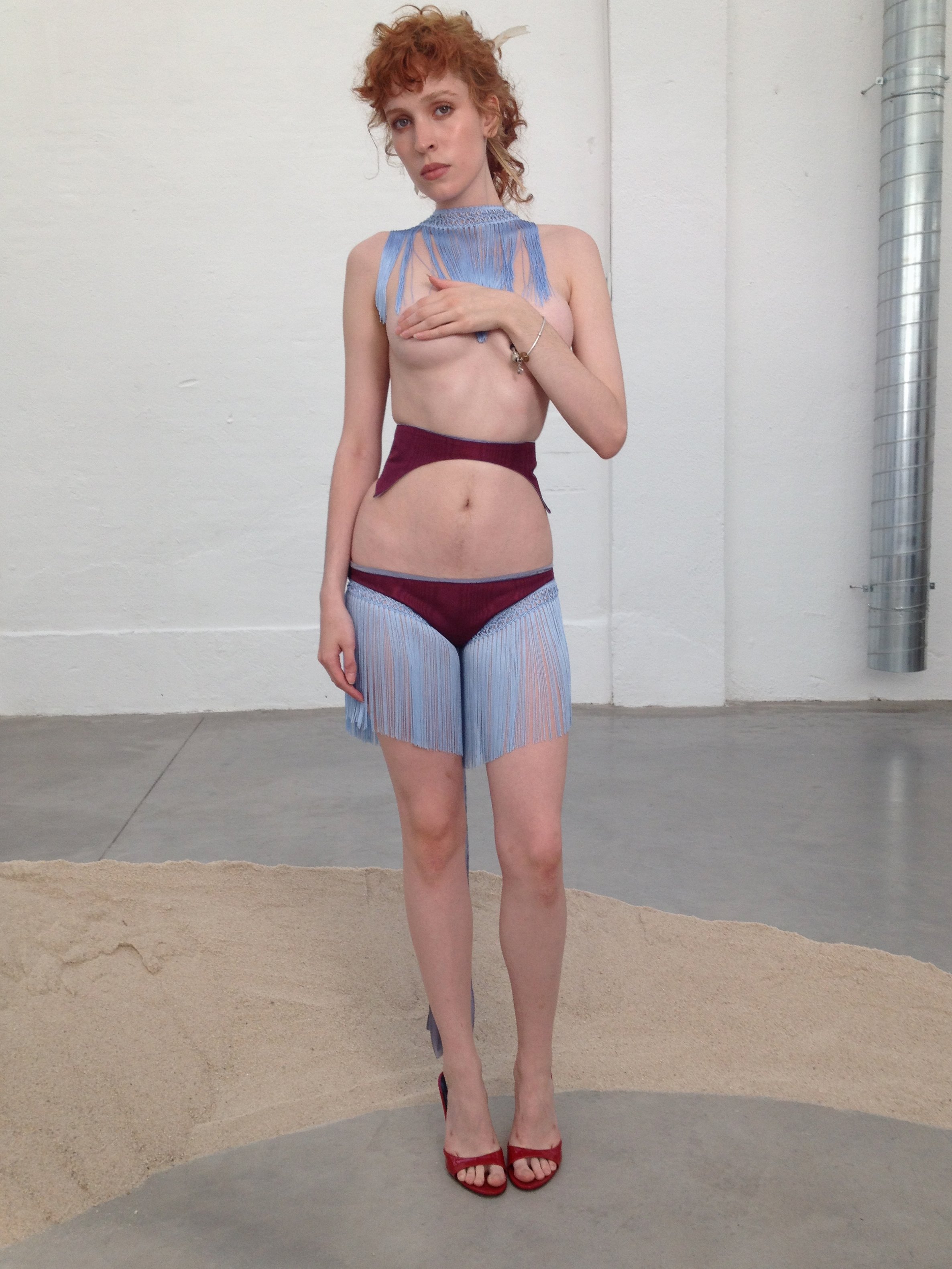
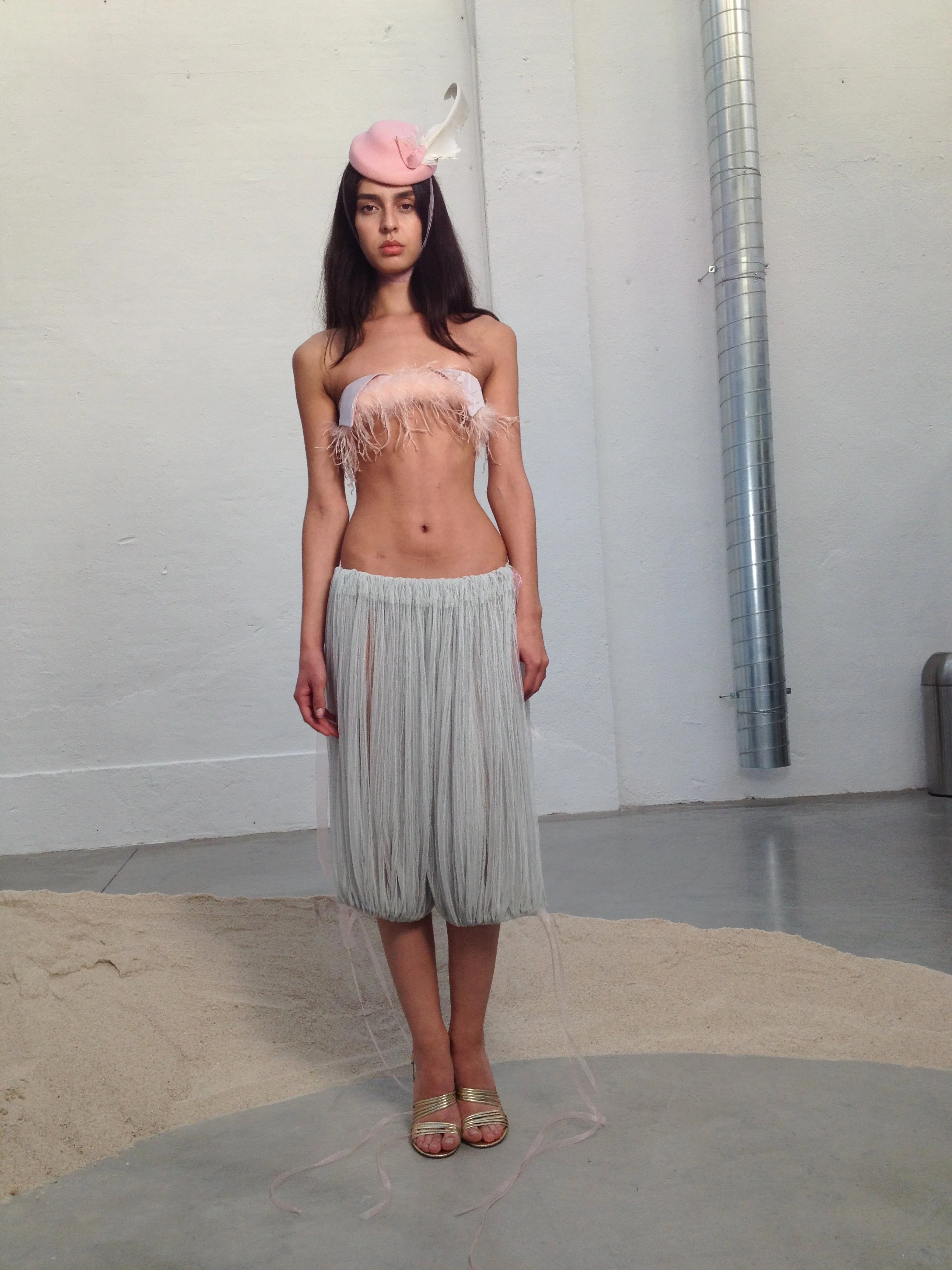
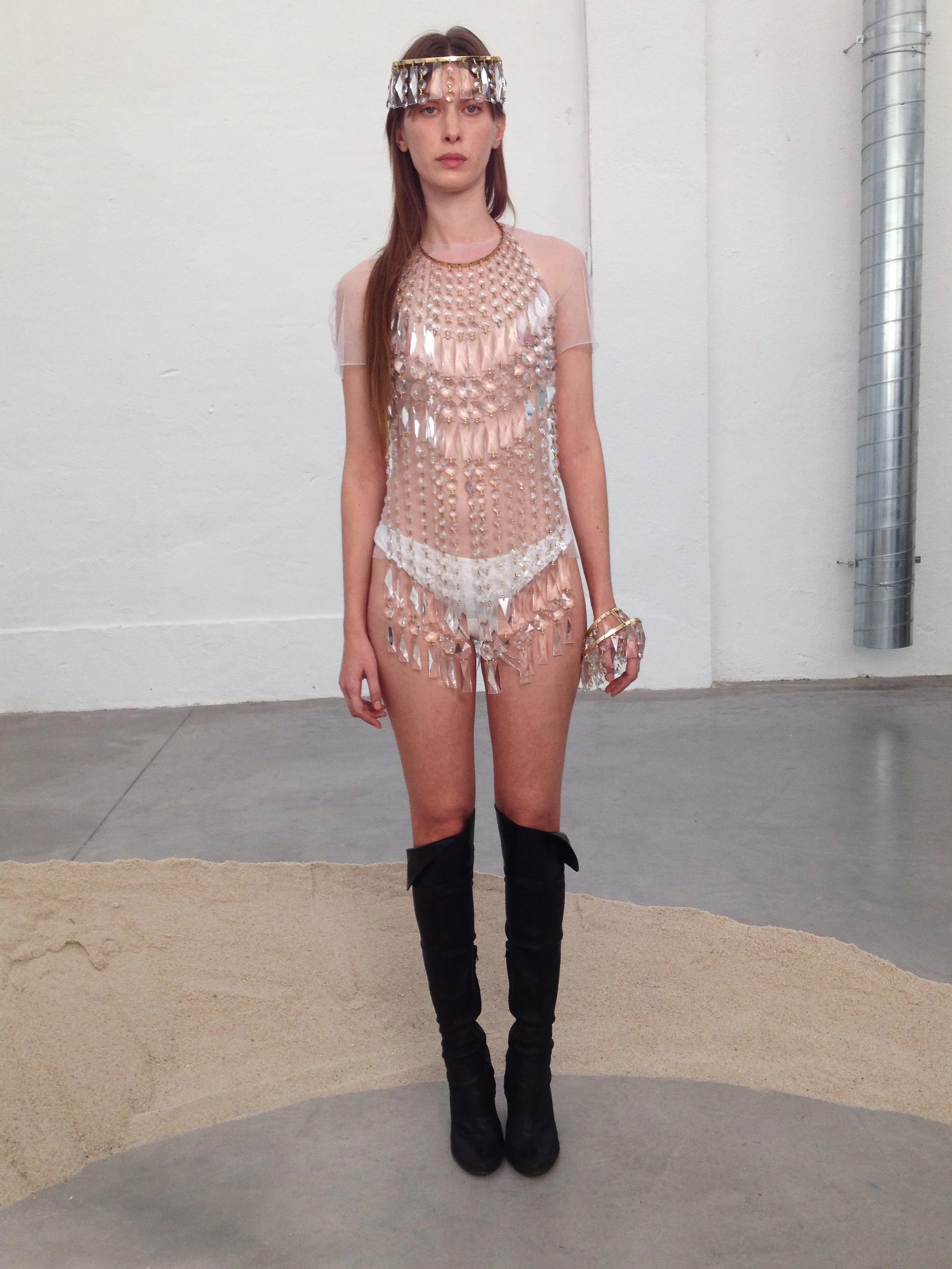
A veil can become somebody else’s uncertainty. A knot can hold another person’s memory. Exposed skin can carry another vulnerability. A shield can protect against another fear. Perhaps that is one of Víspera’s most important achievements: making something intensely personal without making it inaccessible to another interior.
EPILOGUE
A few hours after Nara and I said goodbye, I happened upon Gabo Ferro’s Volver a volver.
It explained something the collection had begun stirring.
I thought about returning to places that no longer contain the people we were when we knew them. About how strangely the things we love outlive particular versions of ourselves. A perfume. A heel. A flower. Or a dress. Eventually we scatter ourselves among them, leaving evidence of our presence. Perhaps this is why the beach matters so much. Nara returns to it, photographs herself through others upon it, reconstructs its sand elsewhere, sends a gentle breeze across it and finally carries it forward into clothes. In one of her own texts, she imagines that very breeze someday carrying her back to that dreamed-of shore.
At 2:22 AM, somewhere between the last photograph and a cigarette, I found myself thinking…
Criticism asks very little of the critic compared with what art asks of the artist. We arrive after the risk has been taken: after money has been spent, sleep has been lost, the idea doubted and, eventually, the result placed before us. Discovery demands something bolder: the commitment and responsibility towards the arts. There is no consensus for us to hide. No archive waiting to validate your argument. No famous name assuring you that your attention has been correctly placed. You simply have to look close enough to decide whether something deserves another pair of eyes.
The world is not always fair or kind to the new. Sometimes the new simply needs somebody willing to stand beside it and say:
Keep going.
I cannot accurately tell you what MORAÏS will become. Neither, I suspect, can Nara. To pretend otherwise would betray the very collection that’s been made. Part of Víspera’s beauty comes from being unfinished, from standing at the threshold and accepting that the door has opened before anyone knows exactly what lies behind it.
I can only tell you that I see clothes capable of making another person’s memories begin speaking back to him.
Not everyone can make great art, but a great artist can come from anywhere.
Whether Nara will become one is a question only work and time can answer. More than an anointment, she needs the opportunity to continue. Because art, particularly when it is this young and unprotected, needs much more than applause once everybody has already learned to recognize its value.
Víspera means the eve.
Nara is standing there now, covered in the last light of one day, carrying a shield that may become the beginning of another.
My words to you, fellow reader, are:
Pay attention.
We may have arrived just in time.
WRITTEN BY FREDDY ESPINAL
Selected Credits
Creative & Artistic Direction — Nara Alonso
Photography — Luis Calvo
Styling — Nina Walinski
Set design — Jorge García
Casting Direction — Miguel Braña
Headpieces — Marina Porta (looks 2,9) & Maritxu (looks 6,7)
Full production credits via MORAÏS.
