
Taste, Literally.
The first thing that convinced me Brianna Hollingsworth understood fashion was caviar.
For Balmain Spring 2026, Olivier Rousteing loosened the military severity that has followed his work for years and let something considerably more organic take the stage. One look placed an oversized olive field jacket over a brown suede mini, then almost buried the torso beneath ropes of wooden beads in tobacco, amber and dark brown. Tassels hang from the skirt. The jewellery is excessive enough to become clothing itself. Olivier described the collection through ideas of naturalness and freedom; wooden beads, shells and craft replaced some of the armour-plated polish usually associated with his Balmain. Olivier and I rarely agree on much, but here he gave Hollingsworth excellent material.
She answered with black-garlic steak and caviar.
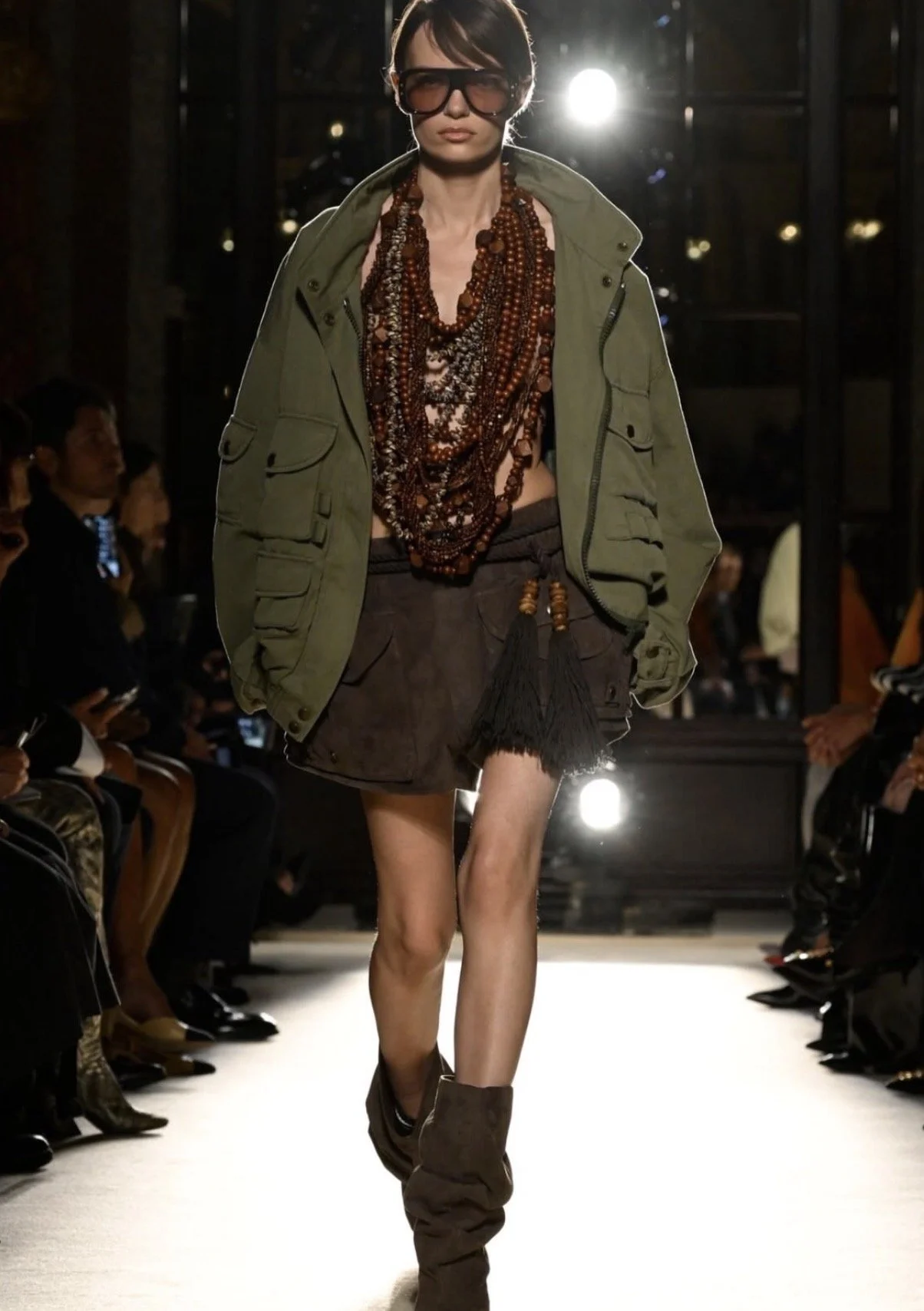
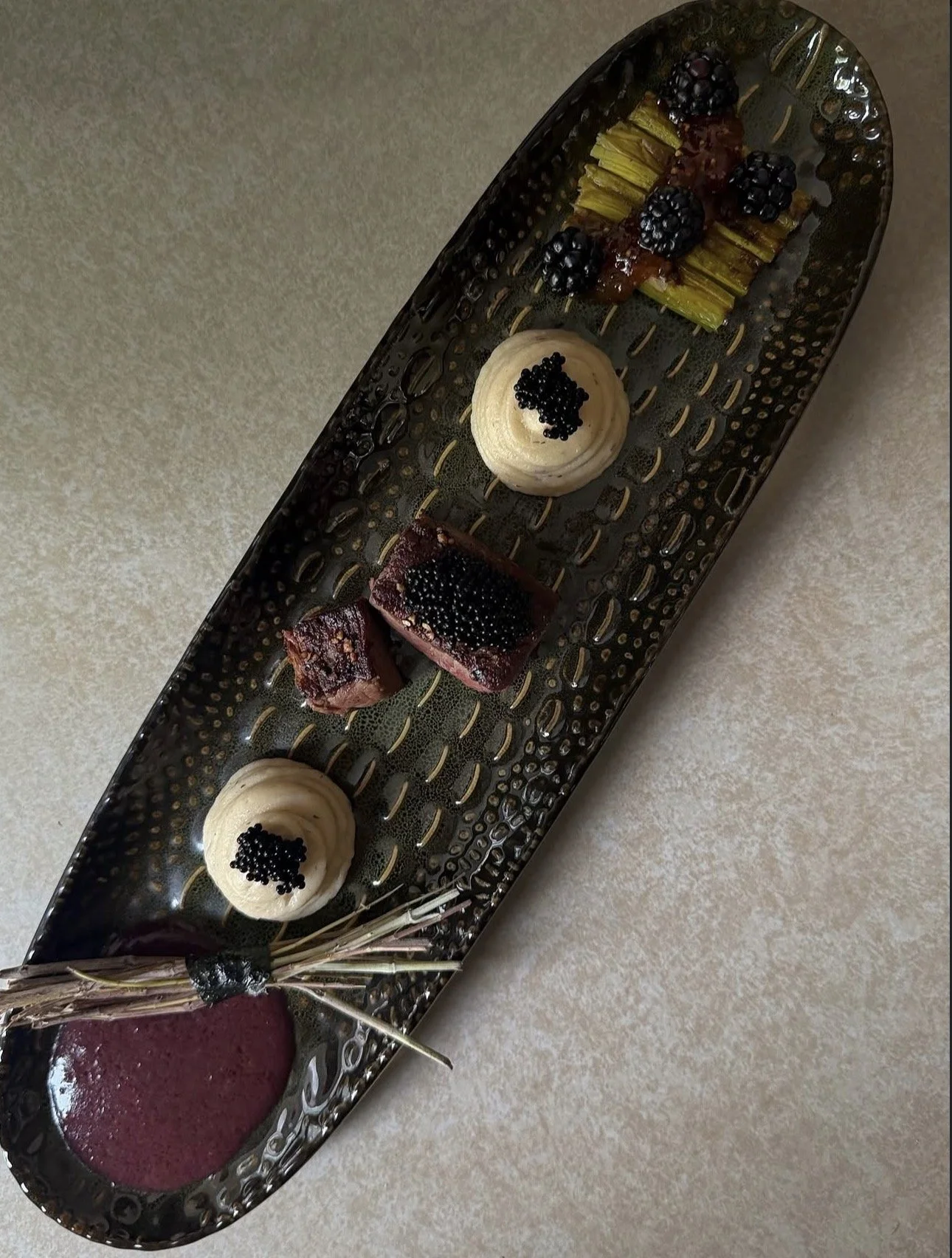
The caviar is the first giveaway. Hundreds of tiny glossy black spheres reproduce the repetitive logic of the necklaces without attempting anything as vulgar or explicit as drawing them on the plate. The steak carries the dense mahogany of the suede below; darker sauces and charred surfaces drag the palette toward the beads’ deepest browns. Even the plate itself—a long, narrow, almost ceremonial-looking object—allows the ingredients to sit as separate ornaments along one continuous axis, much like the strands accumulating down the model’s chest.
What interests me is that Hollingsworth understood the jewellery was doing considerably more than accessorising the look. It was supplying its rhythm. Repetition, weight, irregularity. Once those qualities become caviar, steak, berries and small concentrations of sauce, the clothes are gone, but Balmain remains. The result is—in summary—an exquisite serve, though I cannot extend the same generosity towards Olivier’s work.
She describes herself, rather fabulously, as a “Fashion Chef.” Working online as MatrixGirl, Hollingsworth grew up in South Jersey, learned to cook young under the influence of her late uncle Adam, a chef, and returned seriously to cooking around 2023. Her project developed after she became bored scrolling through tremendously boring and dull-looking Michelin-style plating and began looking at runways in search of colour, pattern, and texture.
Hollingsworth understands that a runway image cannot survive a change of medium by being copied quite literally. She isolates what is carrying it: sheen, temperature, density, volume, sometimes even the emotional weight and climate surrounding the clothes—and then translates those qualities with ingredients.
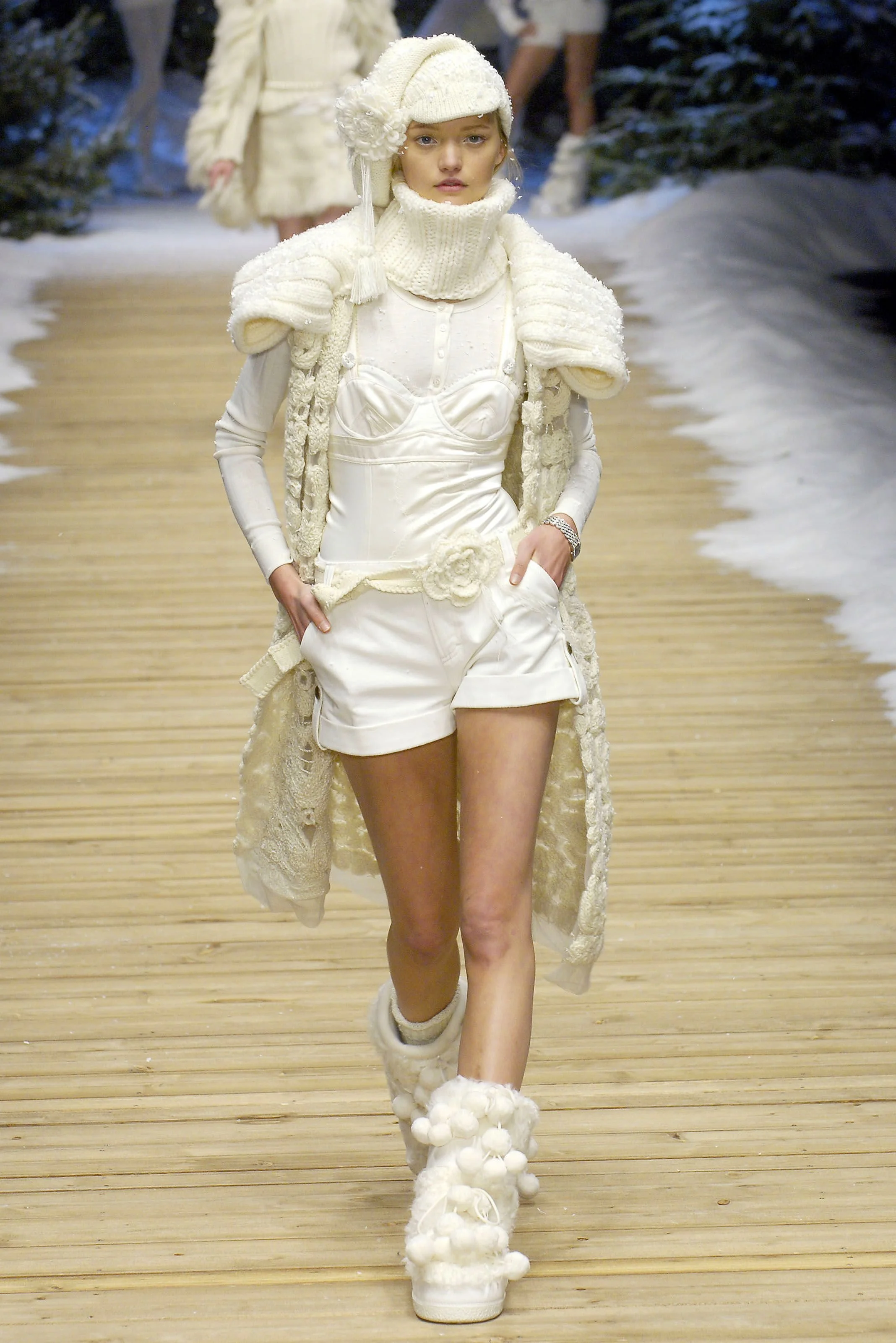
Take her cod inspired by D&G Fall 2006, and I mean D&G, the diffusion line, not Dolce & Gabbana’s Napoleonic mainline collection shown in Milan three days later. Domenico and Stefano staged that collection as a synthetic winter wonderland during the Turin Winter Olympics: falling artificial snow, white cable knits, oversized hats, pom-poms, bulky scarves, and enough alpine kitsch to make a place like Gstaad look restrained.
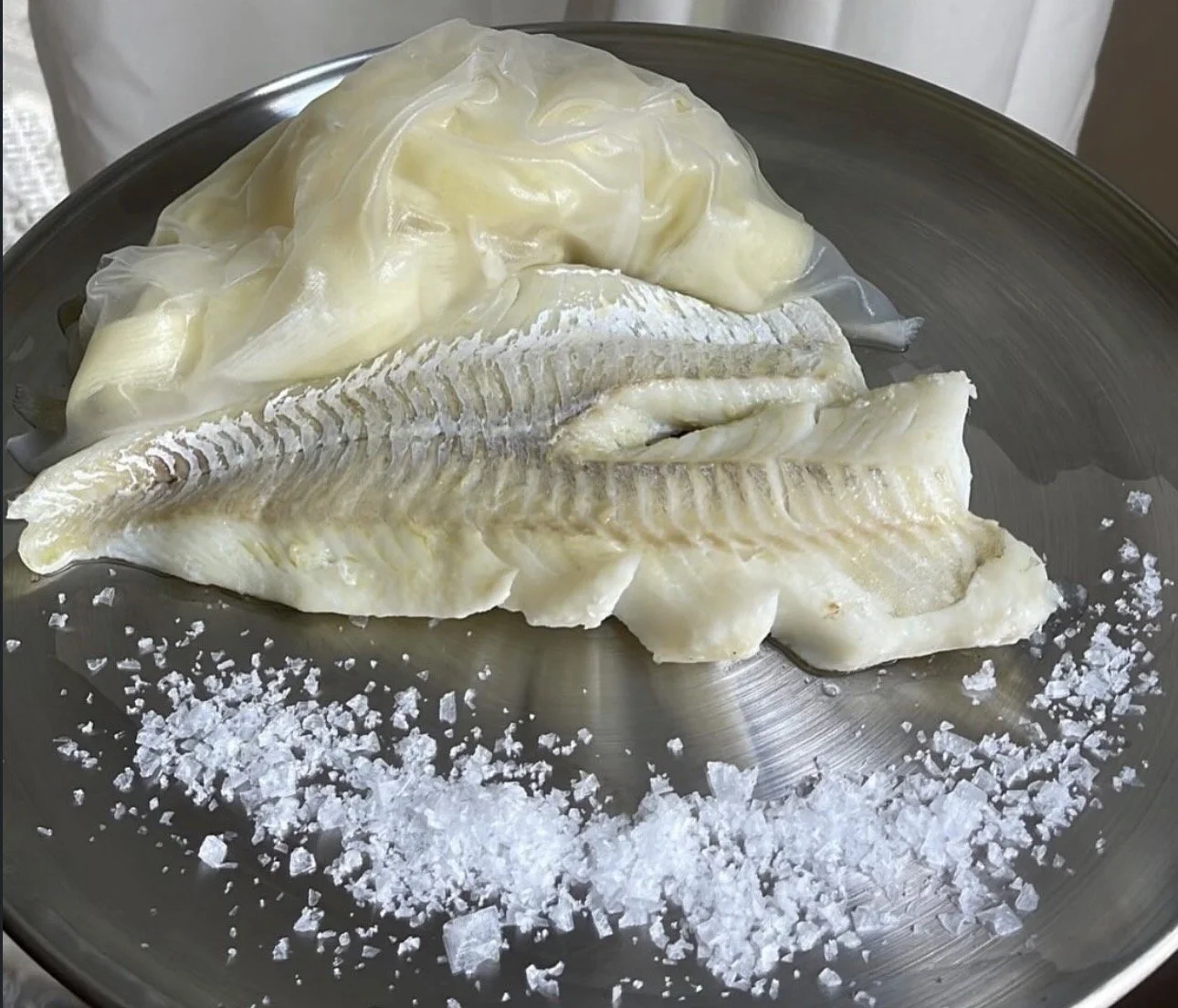
However, Hollingsworth chose cod.
And of course she did.
The pale flesh carries the chalkiness of the knitwear; intact silver skin gives the plate the cold metallic flash of the collection’s glossy ski elements. More impressively, she altered her cooking around the visual requirement. She has explained that she soaked the fish and baked it with garlic butter and herbs because she needed the flesh to remain white and the scales silver. Browning it might have improved somebody’s dinner, but it would have absolutely ruined the reference.
That meticulously small decision tells me almost everything I need to know about the quality of her eye.
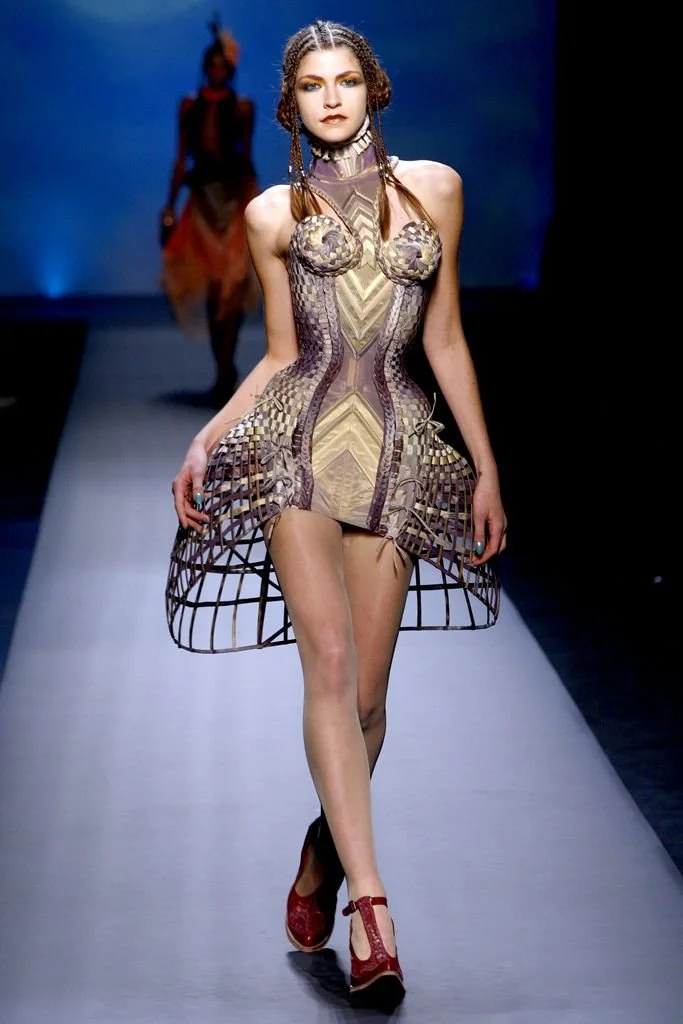
Jean Paul Gaultier Spring 2010 Couture pushes her craft considerably further.
The look she selected is one of those Gaultier constructions in which anatomy and dressmaking become difficult to separate—almost one. A corseted torso runs into a spine-like back, then releases into a rigid cage around the hips. From behind, ribs, vertebrae, and body. The collection itself leaned heavily into armour, corsetry, and elaborate structural workmanship.
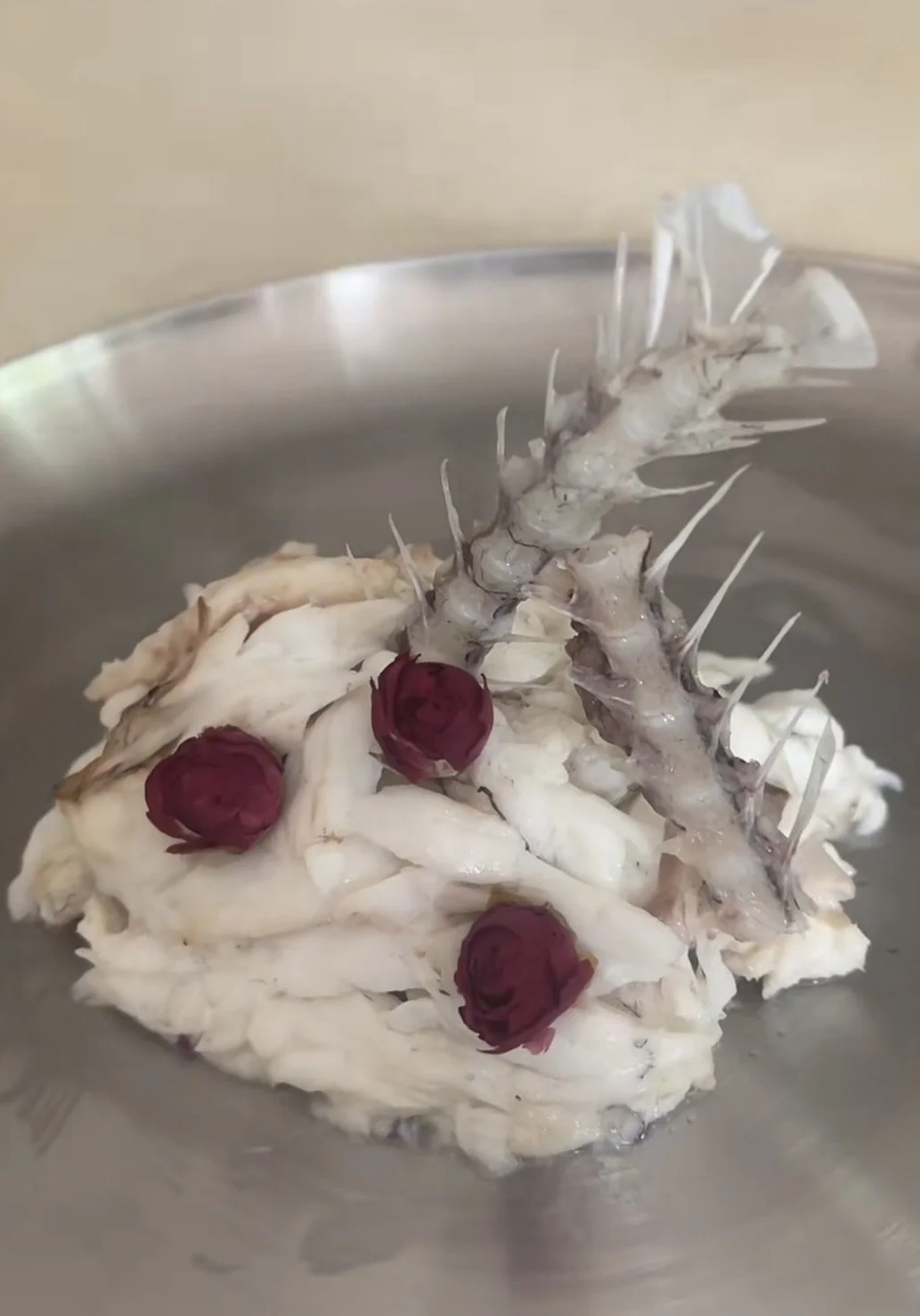
Hollingsworth responded with branzino.
The fish carcass rises vertically from the plate, its exposed spine performing the job Gaultier’s corsetry was already pretending to perform. Fine bones project outward with the same alarming visual tone as the cage surrounding the model’s hips. The white flesh gathers beneath like the body trapped inside. Even the tiny dark red rose details were chosen to pick up on the colour of the shoes.
That last detail is almost irritatingly good. She looked at a couture silhouette built around the suggestion of a skeleton and answered with an actual skeleton. No logo required. No miniature edible dress sitting on top of a cake.
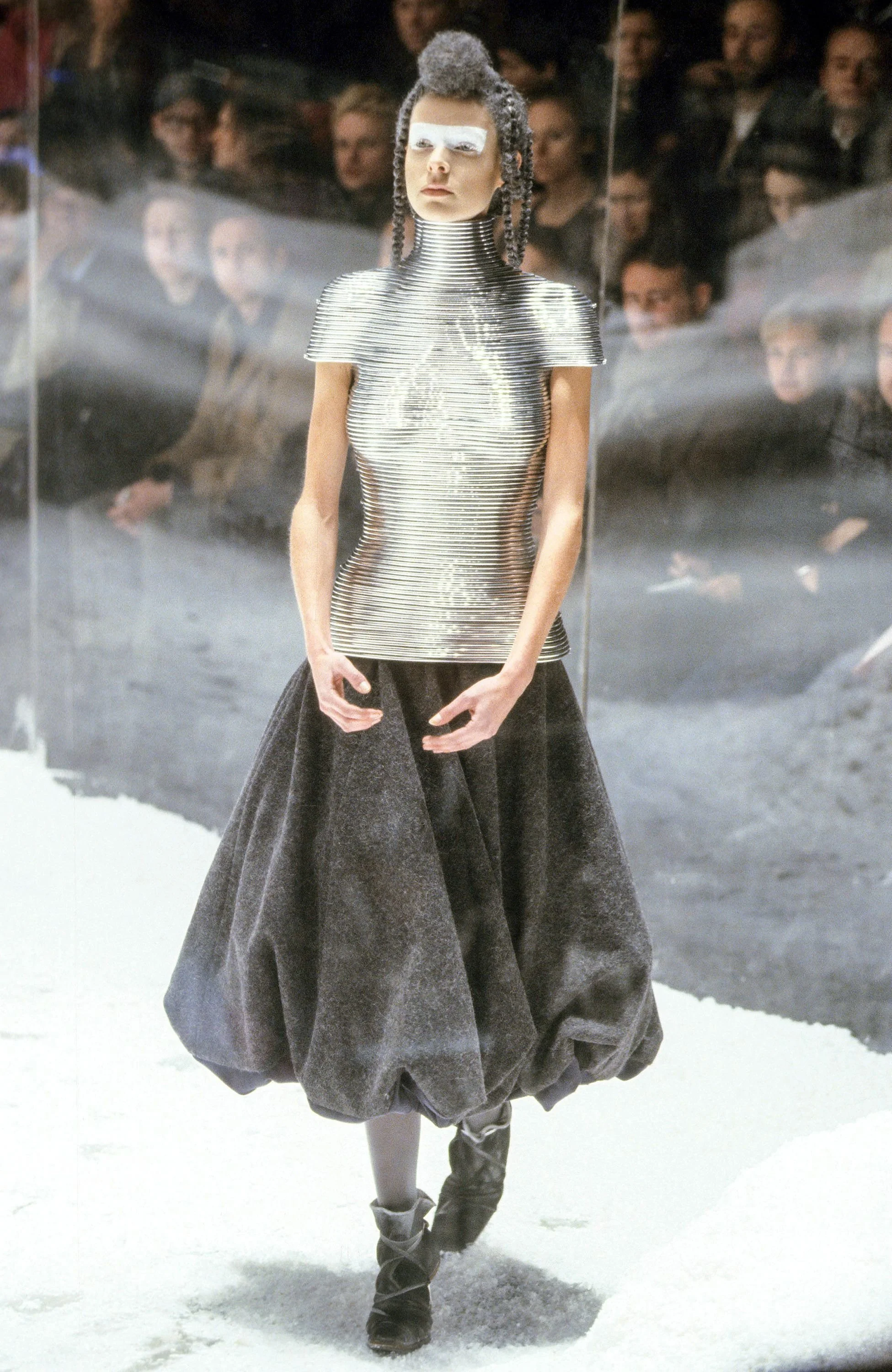
Her Alexander McQueen Fall 1999 piece may be the moment when her art starts looking genuinely curatorial.
The collection was The Overlook, McQueen’s wintry response to The Shining, staged inside a transparent, snow-globe-like box filled with birch trees, ice skaters, and approximately 25 tons of artificial snow. The look Hollingsworth references pairs Shaun Leane’s extraordinary coiled aluminium corset with the weight of a black skirt below it: hard silver sitting above darkness, the body held and restrained somewhere inside. Elsewhere in the collection came rock-crystal icicles and laser-cut metal.
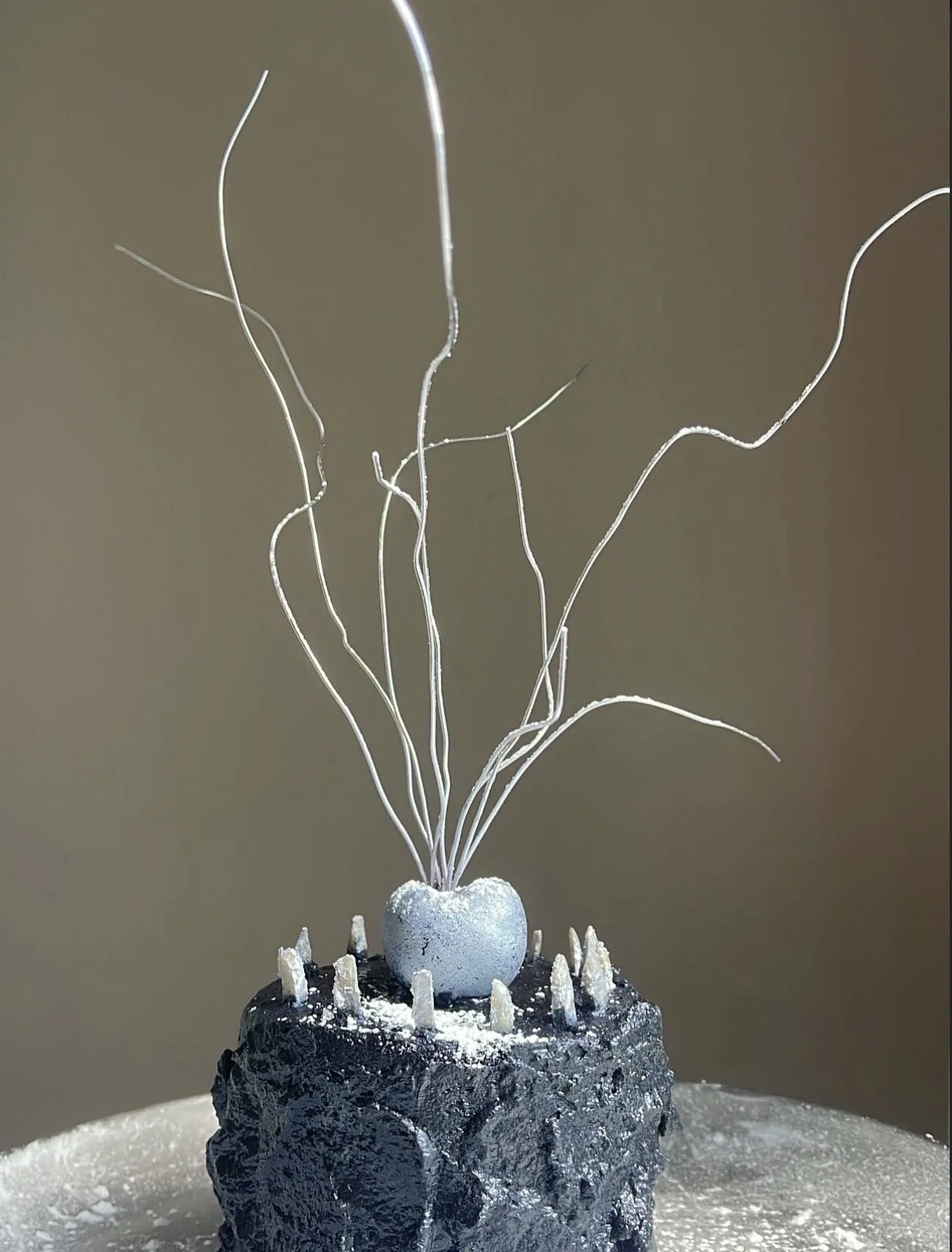
Hollingsworth decides to make cake.
A dense black cylinder carries the mass and absence of light of the skirt. A metallic silver form sits above it, immediately recalling Leane’s aluminium torso. Thin black branches shoot upward like the bare birches from McQueen’s set. Translucent, shard-like details puncture the surface; powdered sugar falls across the plate like snow.
That is the distinction that makes the work far more interesting than “runway-inspired food.” Hollingsworth can decide when the relevant information lives inside the garment and when the collection surrounding it has to come along too.
She quite literally served The Overlook.
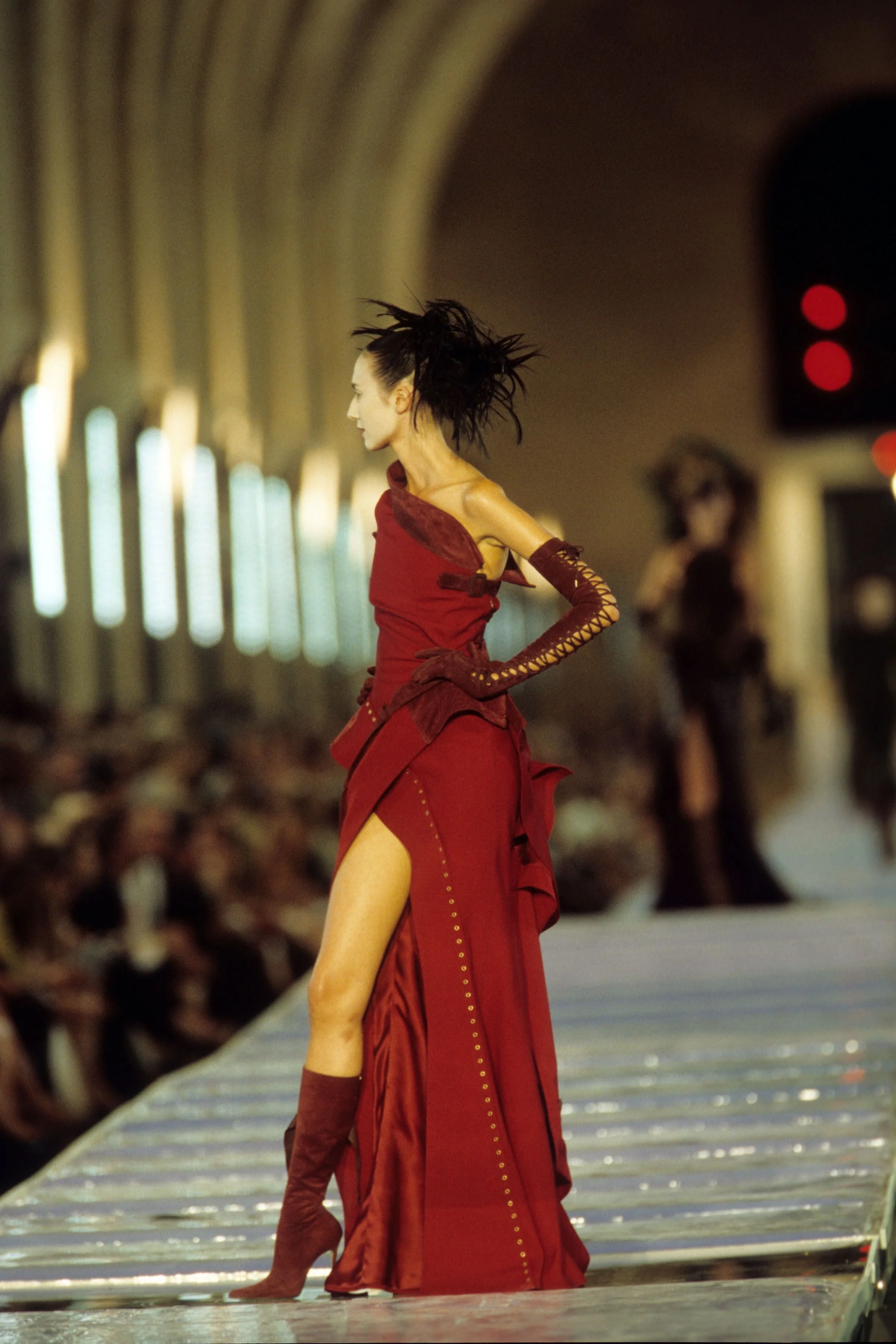
The Christian Dior Fall 1999 Couture translation is delicious in a much more literal way.
Galliano’s original look is an asymmetrical deep-red dress wrapping the torso in diagonal planes, elongated burgundy gloves, a high slit interrupted by small metallic details, and hair exploding outward from the head in vicious black spikes. The collection, staged at Versailles, mixed futuristic imagery with historical fantasy under the influence of The Matrix.
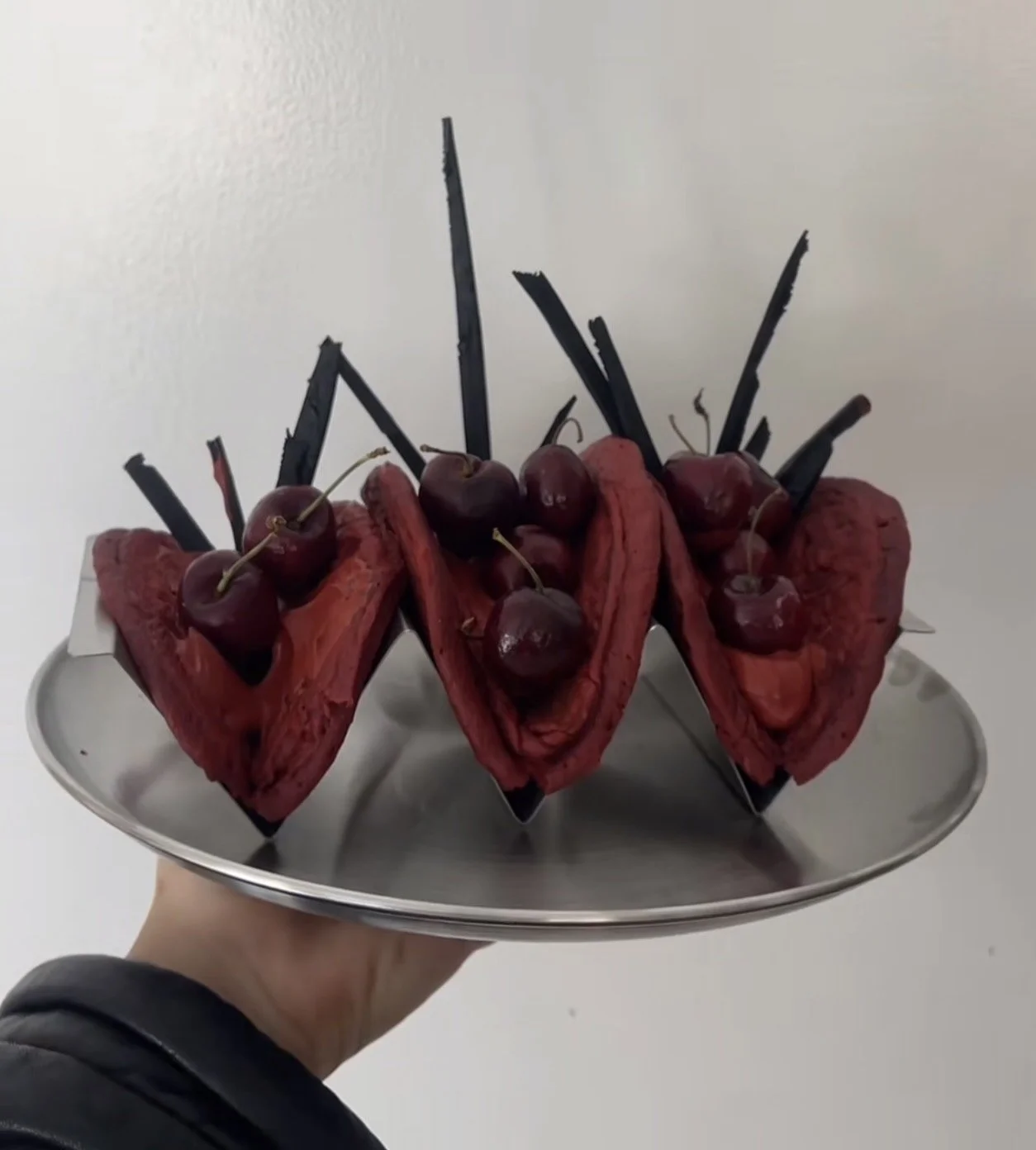
Hollingsworth serves red velvet pancakes with cherry-infused whip, cherries, and dark chocolate.
The pancakes are folded and propped into pointed red planes instead of being stacked politely for brunch. Cherries intensify the dress into something darker and wetter, carrying the glossy burgundy of the gloves and lips. The dark chocolate is where she becomes borderline forensic… long black shards shoot upward from the plate in direct imitation of the model’s spiked hair.
She went down to the hair.
And on top of that, the thing looks delicious. Red velvet, cherries, dark chocolate—I can smell it as I write. There is something faintly diabolical about this. Fashion has spent decades turning hunger into aspiration. Hollingsworth reverses the direction and turns aspiration into dinner.
Are we tempting the models now? Perhaps.
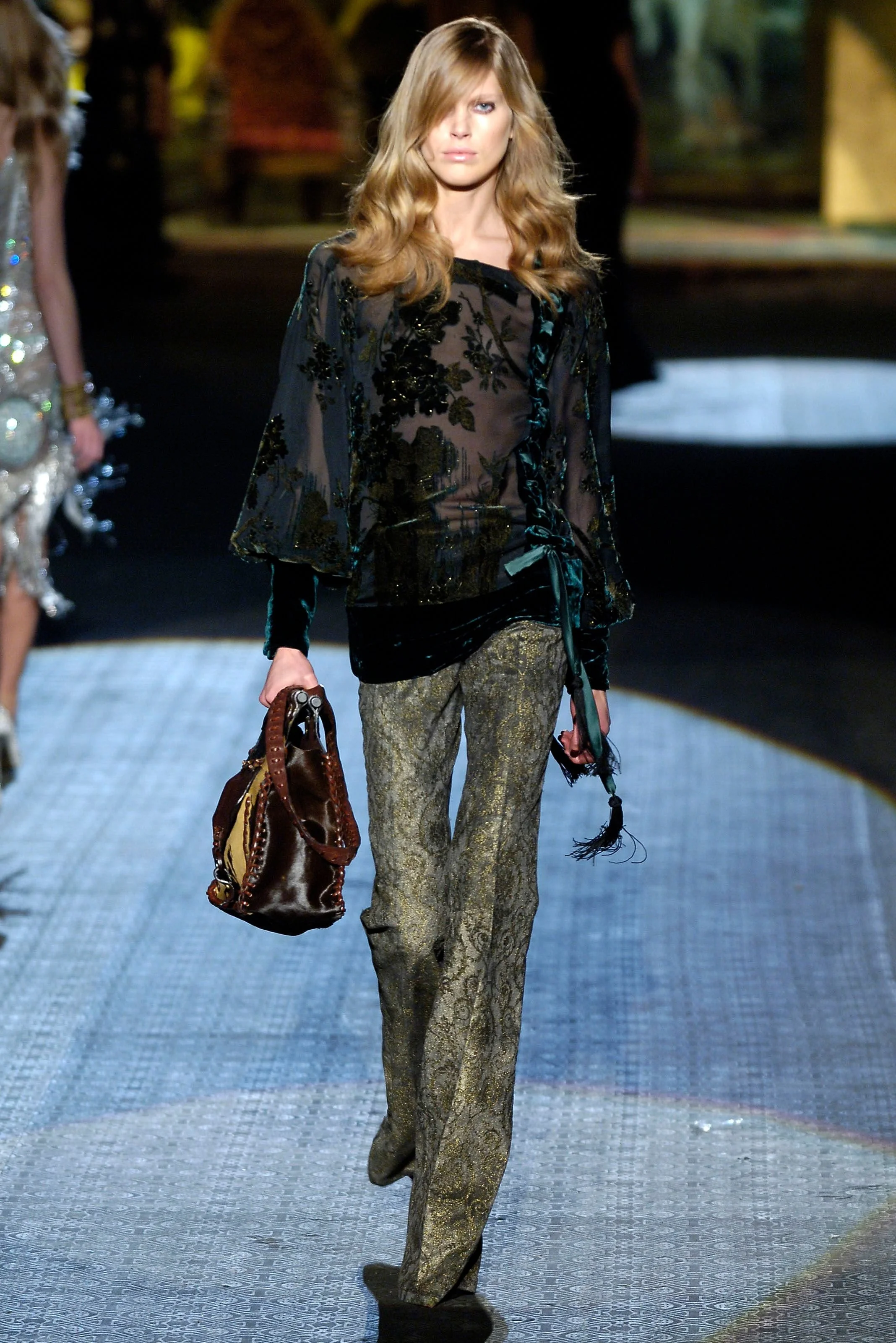
Her Roberto Cavalli Fall 2006 scallop dish is, for me, the chicest on her menu.
The look consists of a dark, semi-sheer blouse carrying floral texture, trousers with an almost reptilian gleam, glossy brown leather at the hand, thin cords and irregular details interrupting the silhouette. It belongs to a collection in which Cavalli was playing with Poiret, Ballets Russes opulence and the louche excess of early-1970s London.
Hollingsworth does something exotically unusual.
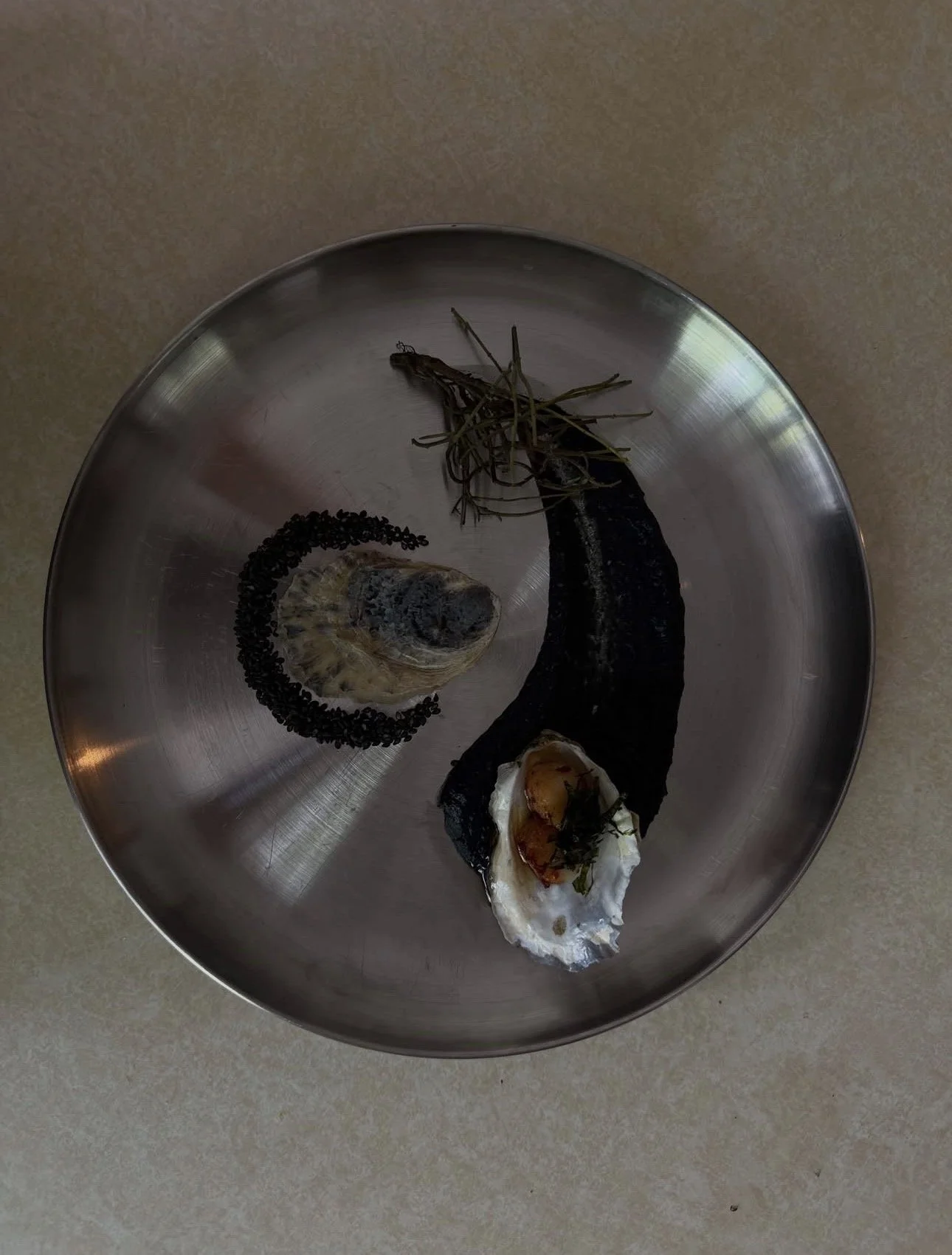
A pale shell surrounded by tiny black beads immediately catches the black-on-black texture of the blouse. Beside it, another shell opens to reveal a concentrated amber-orange centre—the same warm flash that appears against all the murkier browns and metallics in the look. A long, charred black curve sweeps across the plate and gives the composition movement, while thin organic stems introduce the same slightly dishevelled line created by the accessories.
The stainless-steel plate helps. Against all that darkness, wetness and marineness, the food begins to look almost jewel-like.
And this is where she becomes potentially much more valuable to fashion than an entertaining TikTok video.
Lately, luxury has become increasingly interested in hospitality. The strongest stores, private-client programs, and brand activations are attempts to keep somebody inside a house’s universe for longer—to make them understand how the brand lives, eats, travels, entertains, and behaves. Luxury hospitality has been outperforming personal luxury goods, and brands are using hospitality increasingly as a way to deepen relationships with VICs. Food, meanwhile, has become a deliberate fashion-marketing medium.
Hollingsworth has already said that her dream includes designing dinners and food for fashion-house events. Someone should listen. Because there is an obvious commercial proposition hiding underneath all the artistry. Imagine a collection shown at eight. Editors, clients and friends of the house leave having seen it. Later, a smaller group arrives at the flagship or a private dining room and discovers that the collection has followed them there. The corsetry is the dessert. The embroidery is the garnish. The leather is the glaze.
More than offering them clothes to see, we are serving them clothes to eat.
A client who has spent an hour smelling, tasting, and discussing a collection has experienced that collection far beyond the rack. The house has gained another sensory language through which to explain itself. A dinner becomes education, entertainment, and memory all at once.
There is, naturally, filthy commercial potential in that.
I will leave conversion rates to someone in finance, but I would be astonished if making a client inhabit a successful collection through another sense made the clothes less desirable. Brands already know people will queue for a logo on a cappuccino. Hollingsworth offers considerably more room for imagination. Her value proposition lies precisely in the fact that she can take the visual, emotional, and intellectual material a designer has already produced and extend its life.
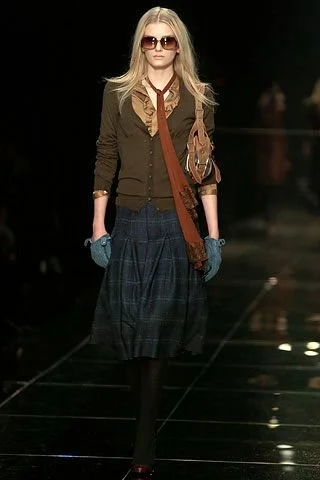
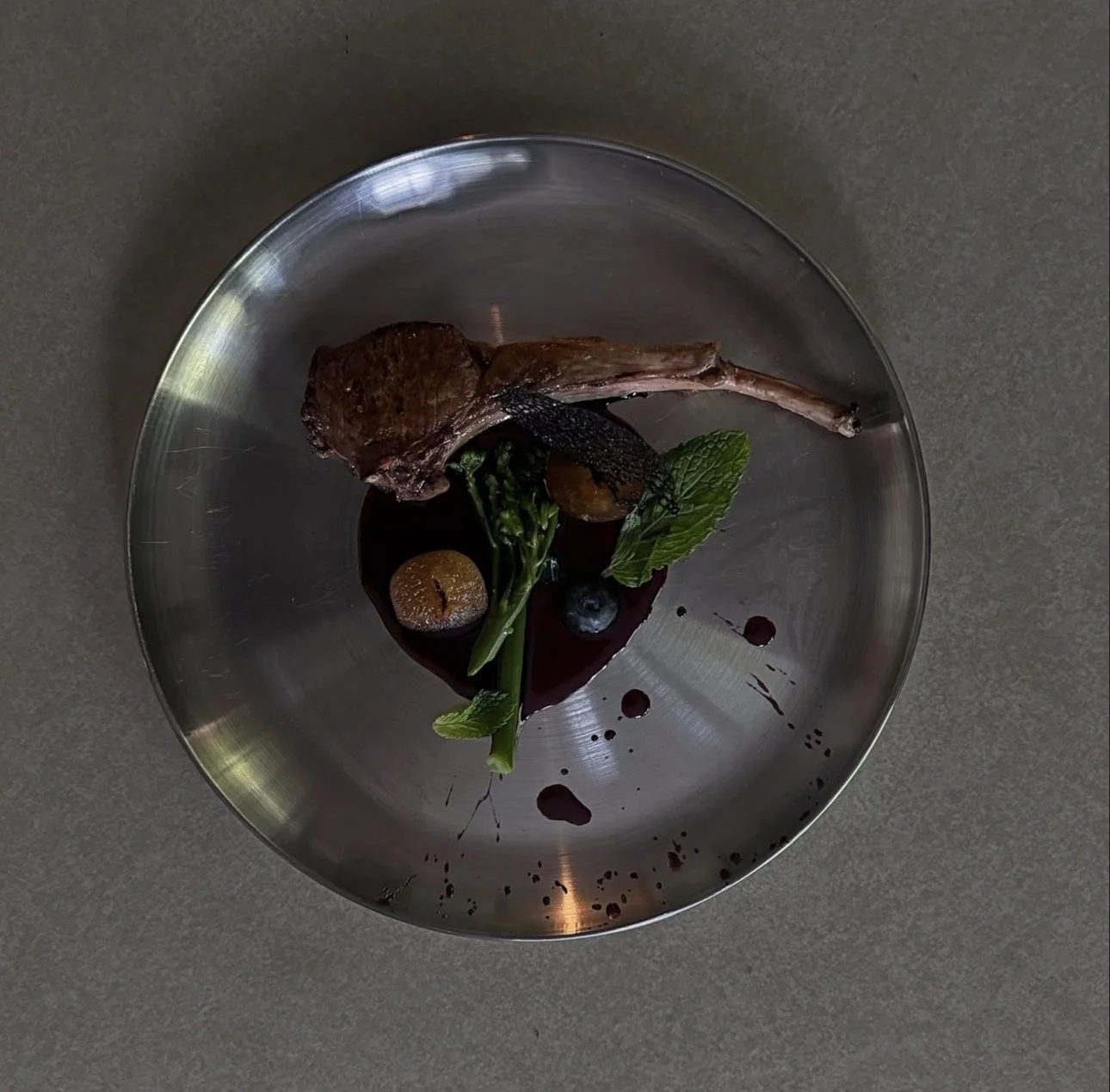
One of the best demonstrations comes from her Burberry Prorsum Fall 2005 plate.
Christopher Bailey was thinking of sixties London, Marianne Faithfull and Yorkshire. The look she chooses is quintessential Bailey-era British layering. Olive cardigan. Brown-gold ruffle neckline. A long rust scarf cutting diagonally across the torso. Dark plaid below. Powder-blue gloves disturbing the earth tones just enough.
She turns it into a lamb chop with cherry glaze.
The chop gives her the brown, country-house heart of the look while its long exposed bone traces the same kind of diagonal line created by the scarf and shoulder strap. The deep cherry sauce pools into the rust and burgundy. Green vegetables pick up the cardigan. Small dark fruit and blackened textures pull the eye toward the navy and charcoal of the skirt; warmer roasted elements retrieve the ochres sitting around the neck.
Nothing on the plate has been selected merely because it tastes autumnal. And yet it tastes autumnal. We are now in September. Fashion week is around the corner. Bailey’s layered Burberry already belongs to the fantasy of cold air, wool, leather, and dressing properly again. Hollingsworth gives it lamb, cherries, greens and the sort of plate one wants when summer has finally exhausted itself.
This woman has range.
She can reproduce the icy temperature of D&G, recognize the engineering of Gaultier, carry an entire McQueen show into dessert, find Galliano’s hair in dark chocolate, and turn Bailey’s British layering into something one might actually want to eat on an October evening. The way she translates one art form into another has become an art form itself. Hollingsworth’s most difficult asset is already present in her work. It is evident she has the skill to understand which detail is carrying an image and has the nerve to discard almost everything else.
I am looking forward to sitting through three courses of it.
As for my next dinner party, my guests should probably start getting excited.
WRITTEN BY FREDDY ESPINAL
